Office Fitout for This Here

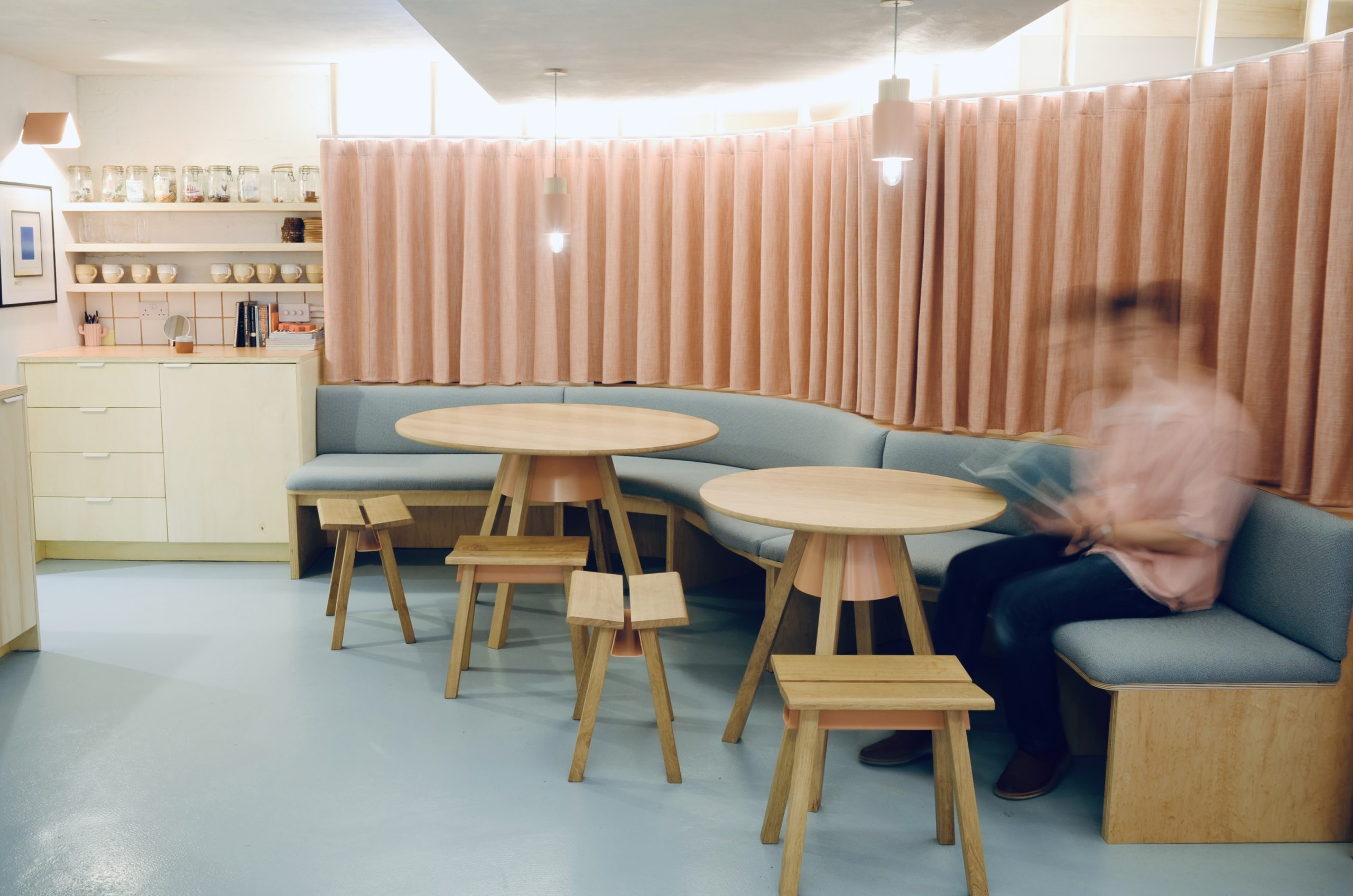
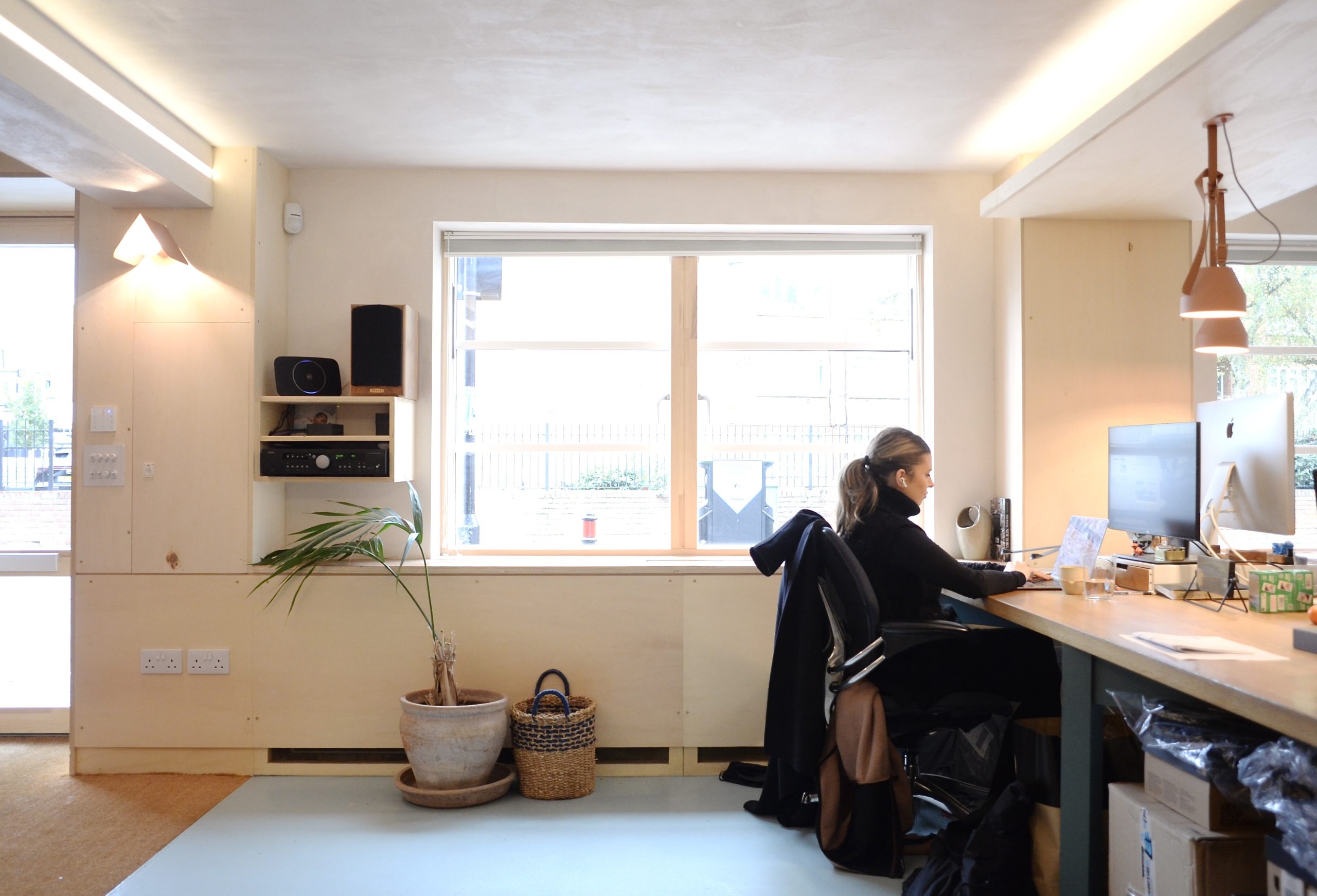
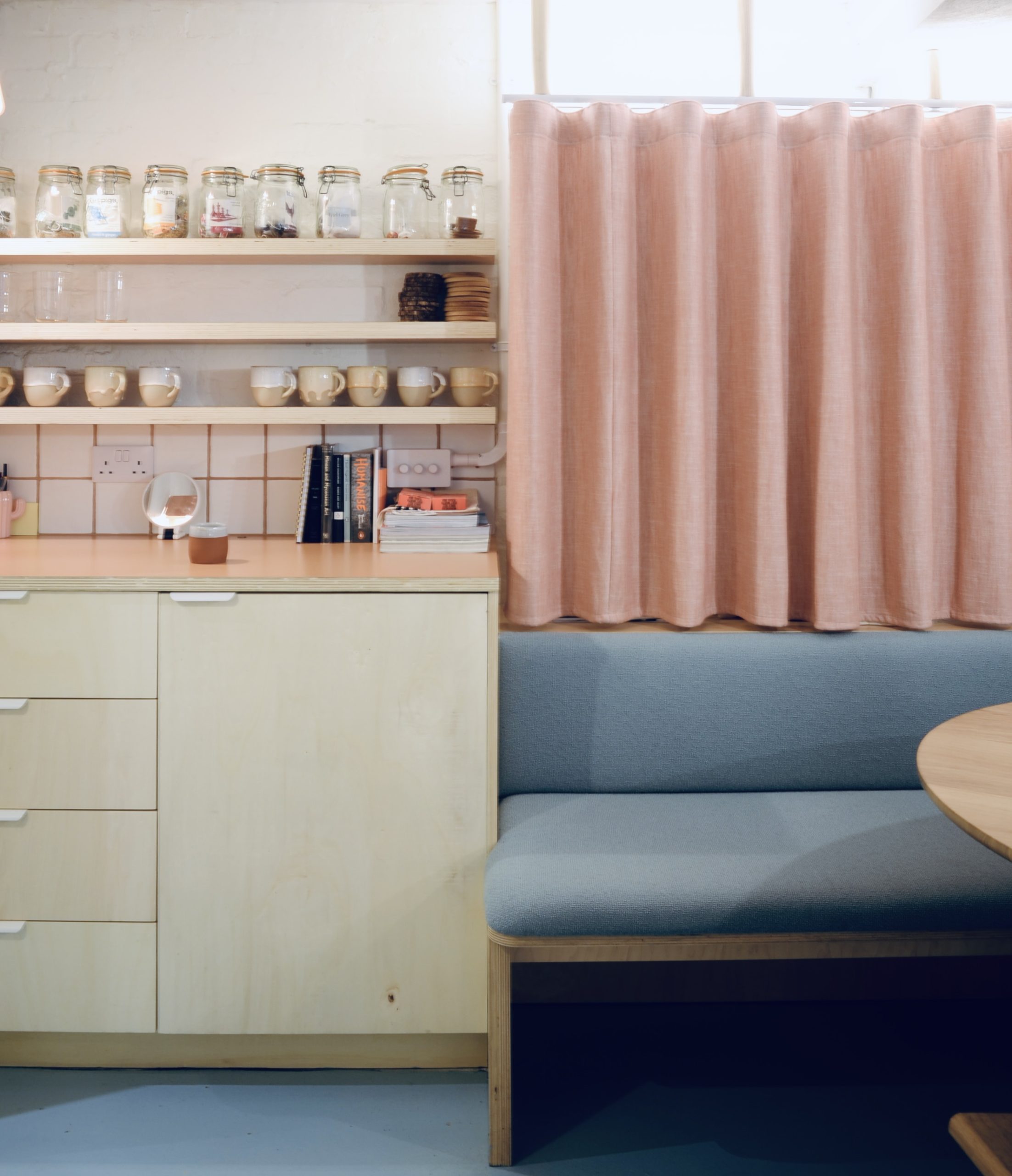
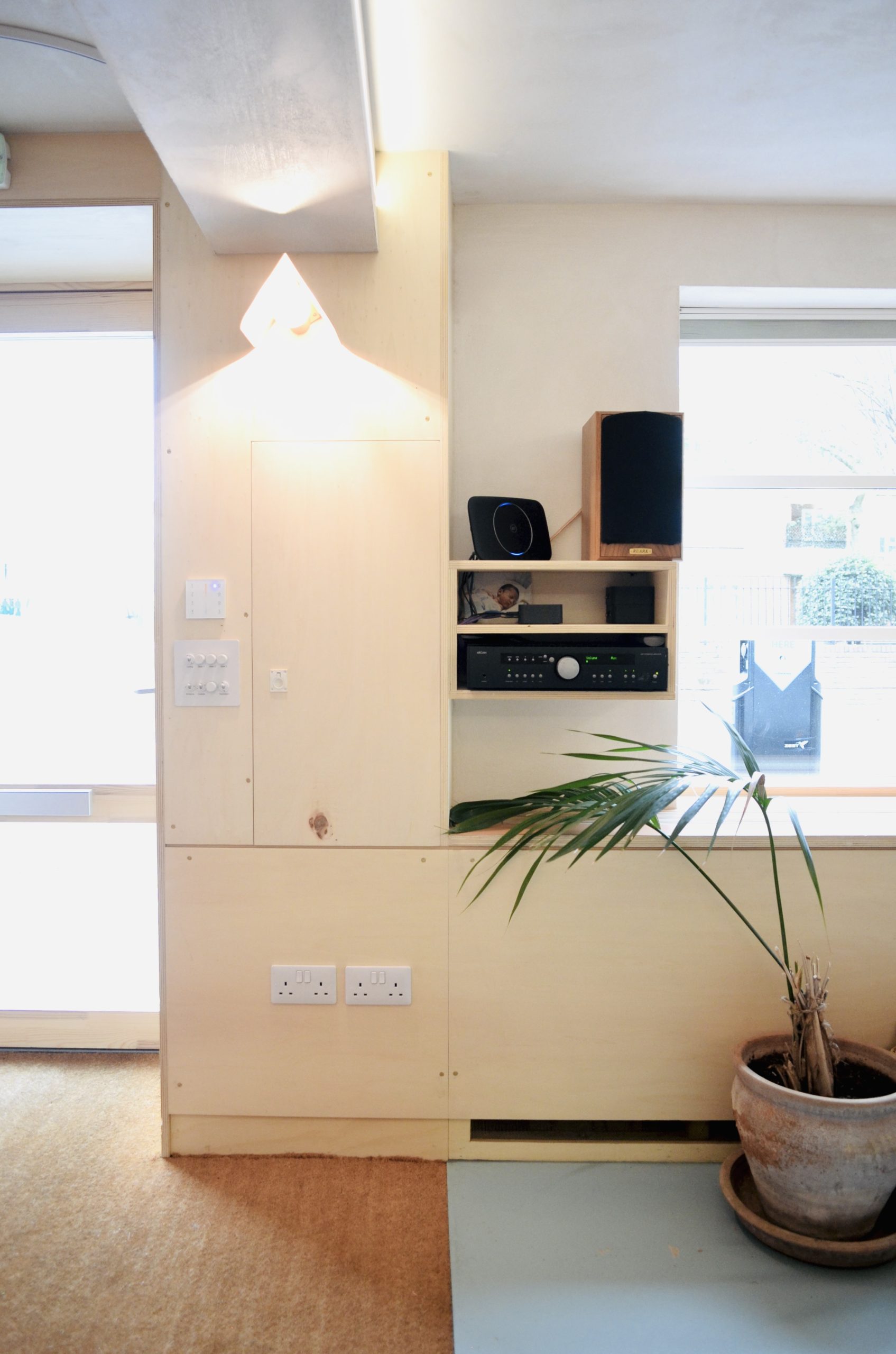
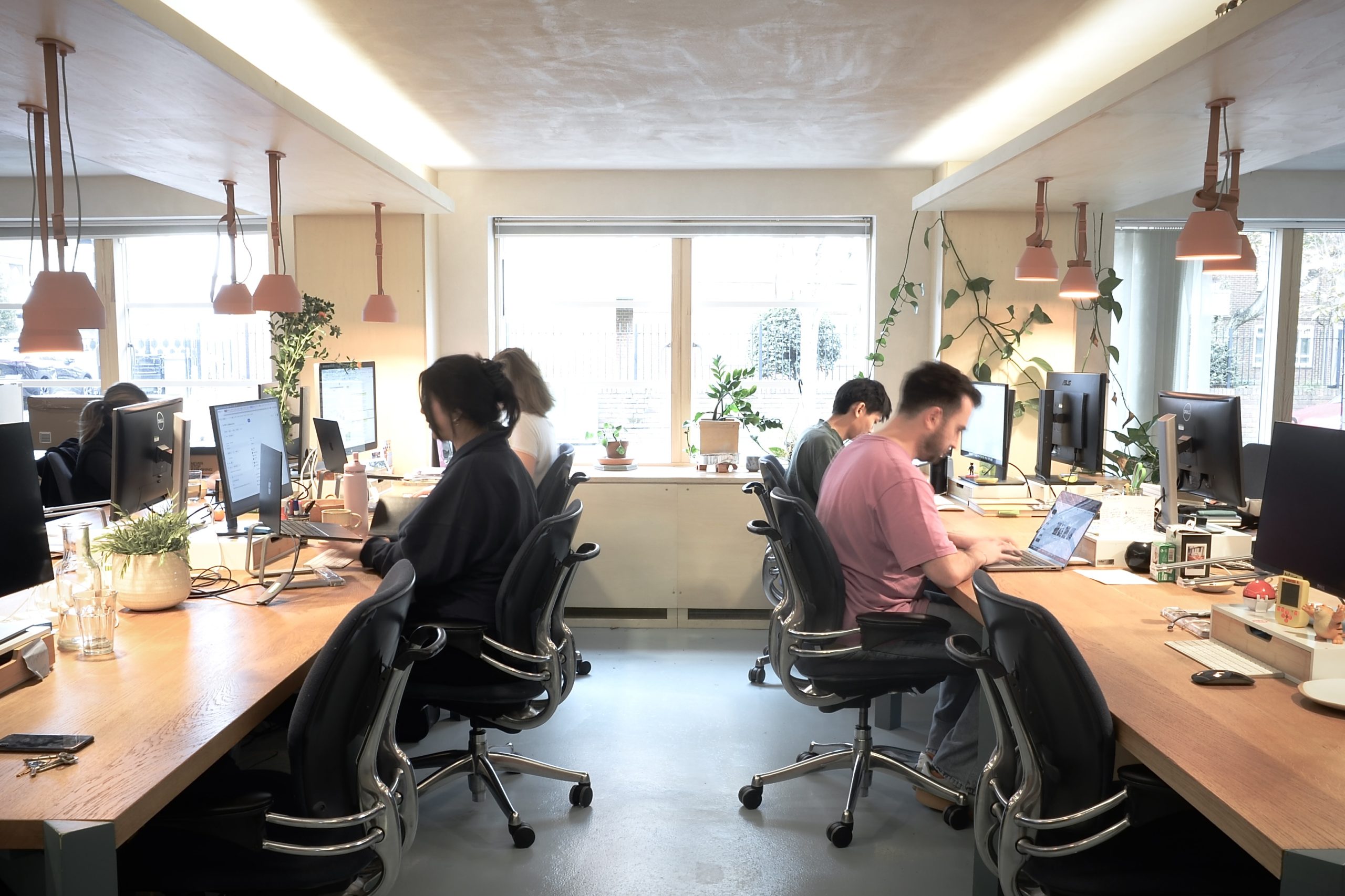
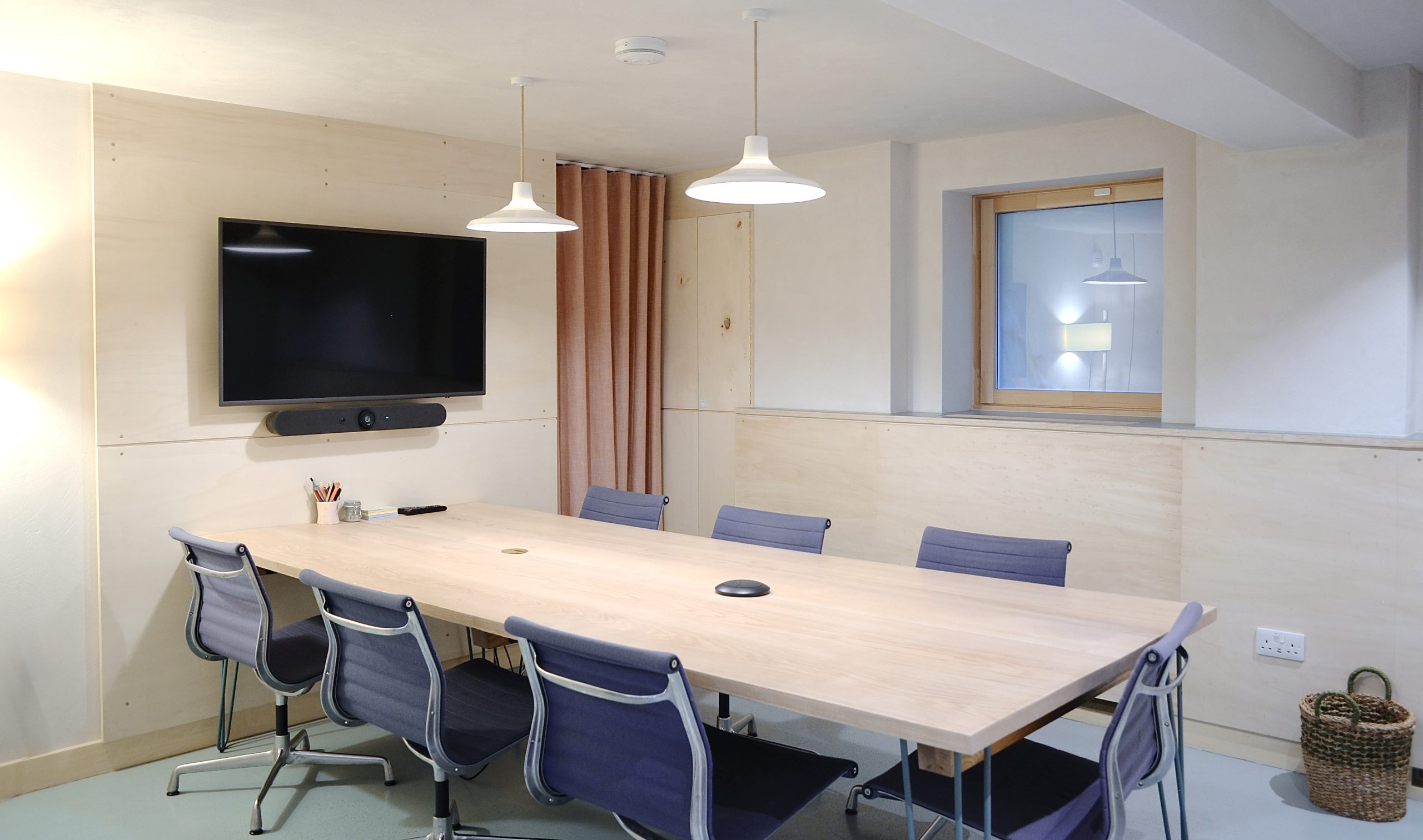
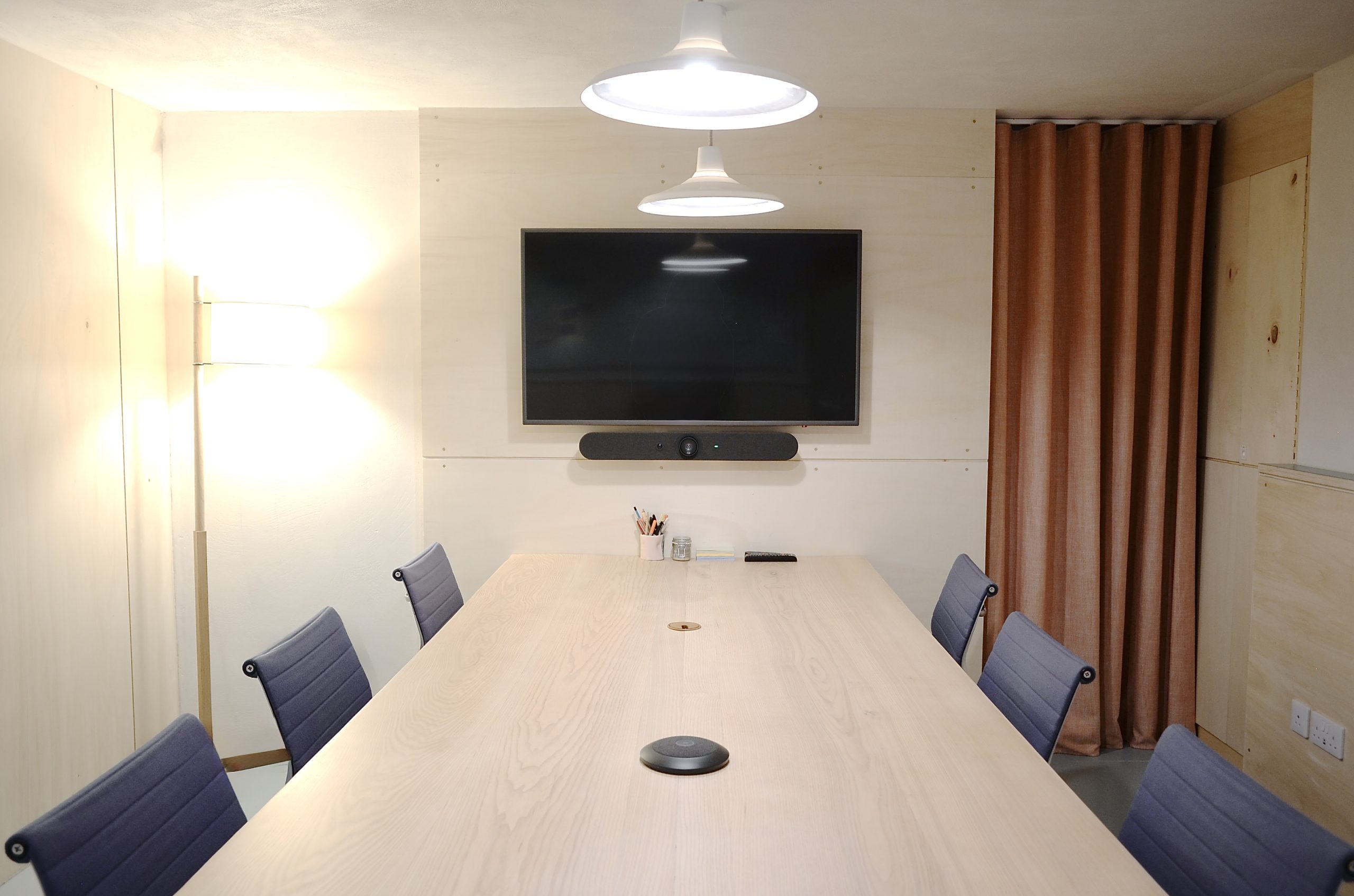
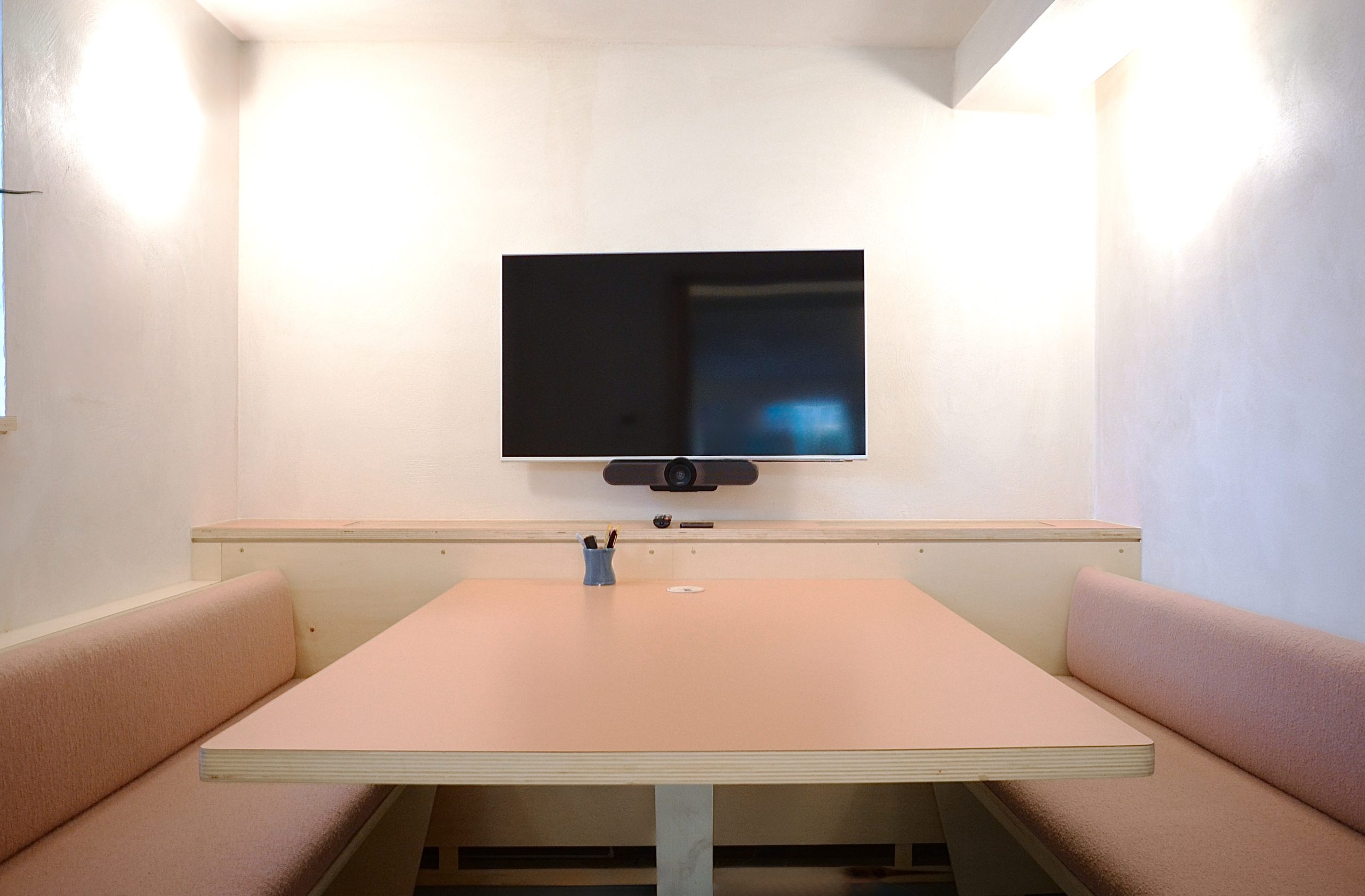
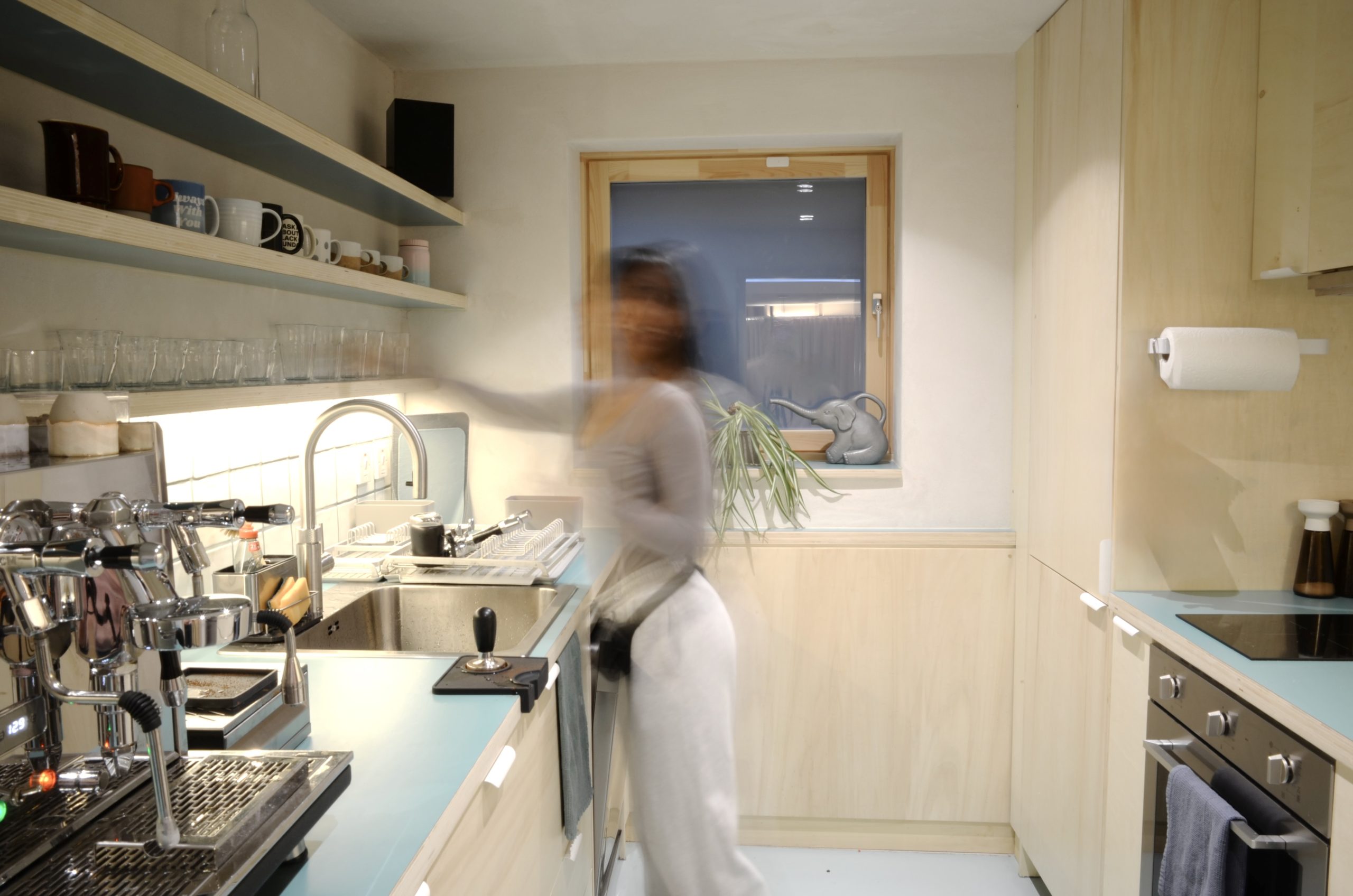
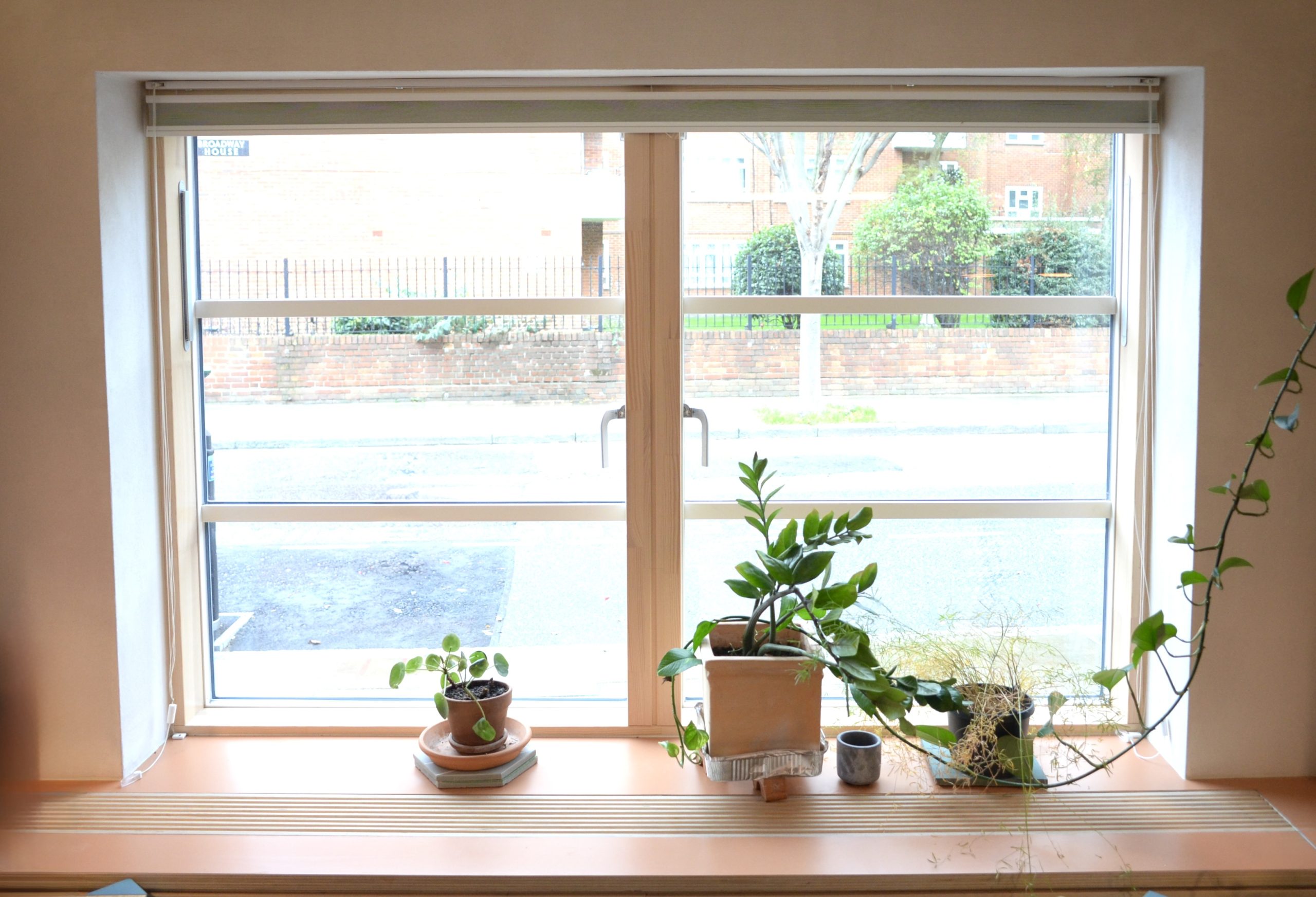
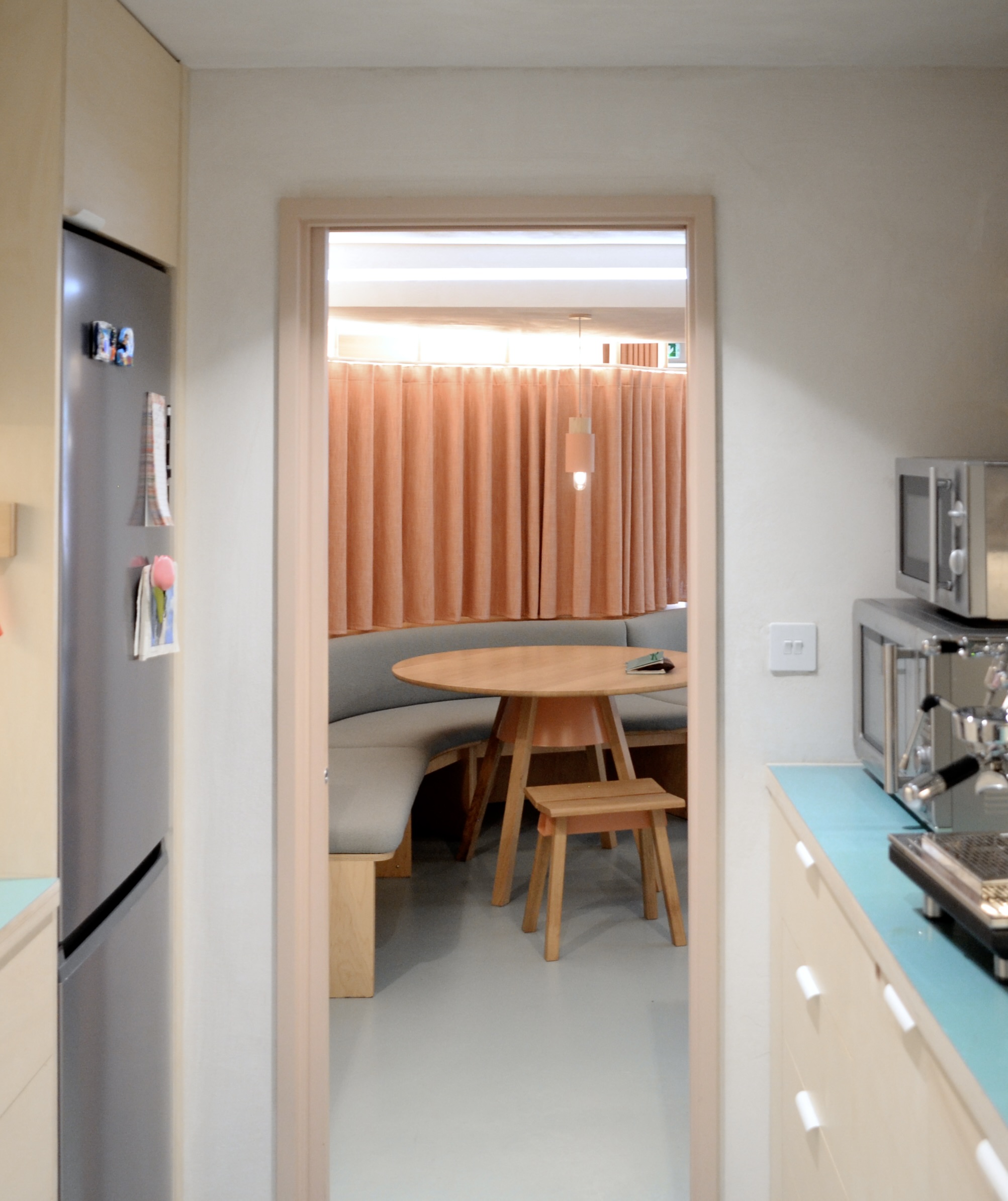
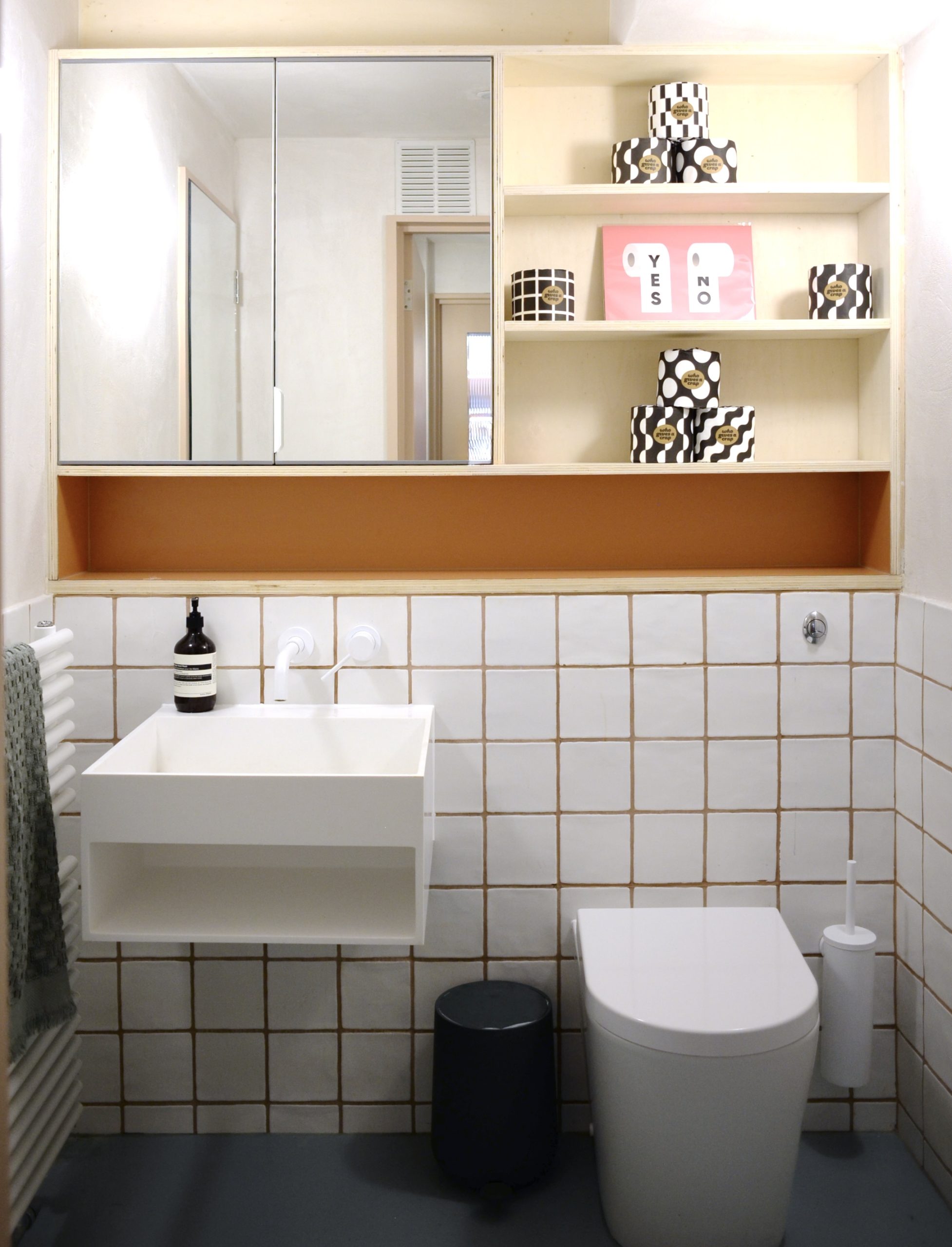
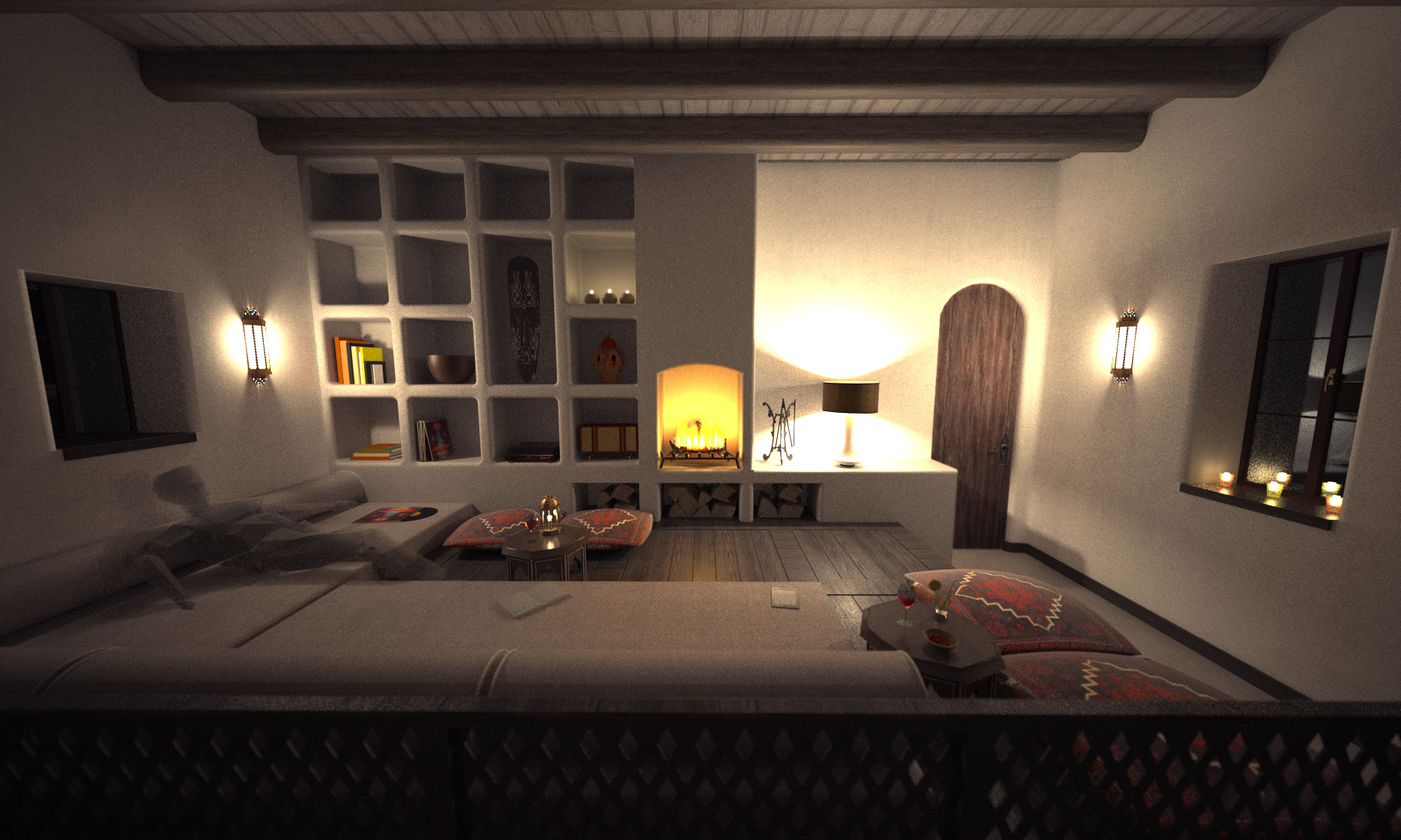
The creative agency, This Here, commissioned Tom Kaneko to fit out a low-ceilinged, featureless, ground floor room of an existing, unremarkable building.

Within these limitations, using soft furnishings, selective lighting and cost-effective joinery, we achieved a series of spaces that feels generous, comfortable, and practical. The design process strove to express the personality and character of this unique agency.

Contractor: Rado Bordei
Upholstery: Hackney Upholstery Studio
Curved Banquette Joinery: K&D Joinery

Garden Studio – Repair

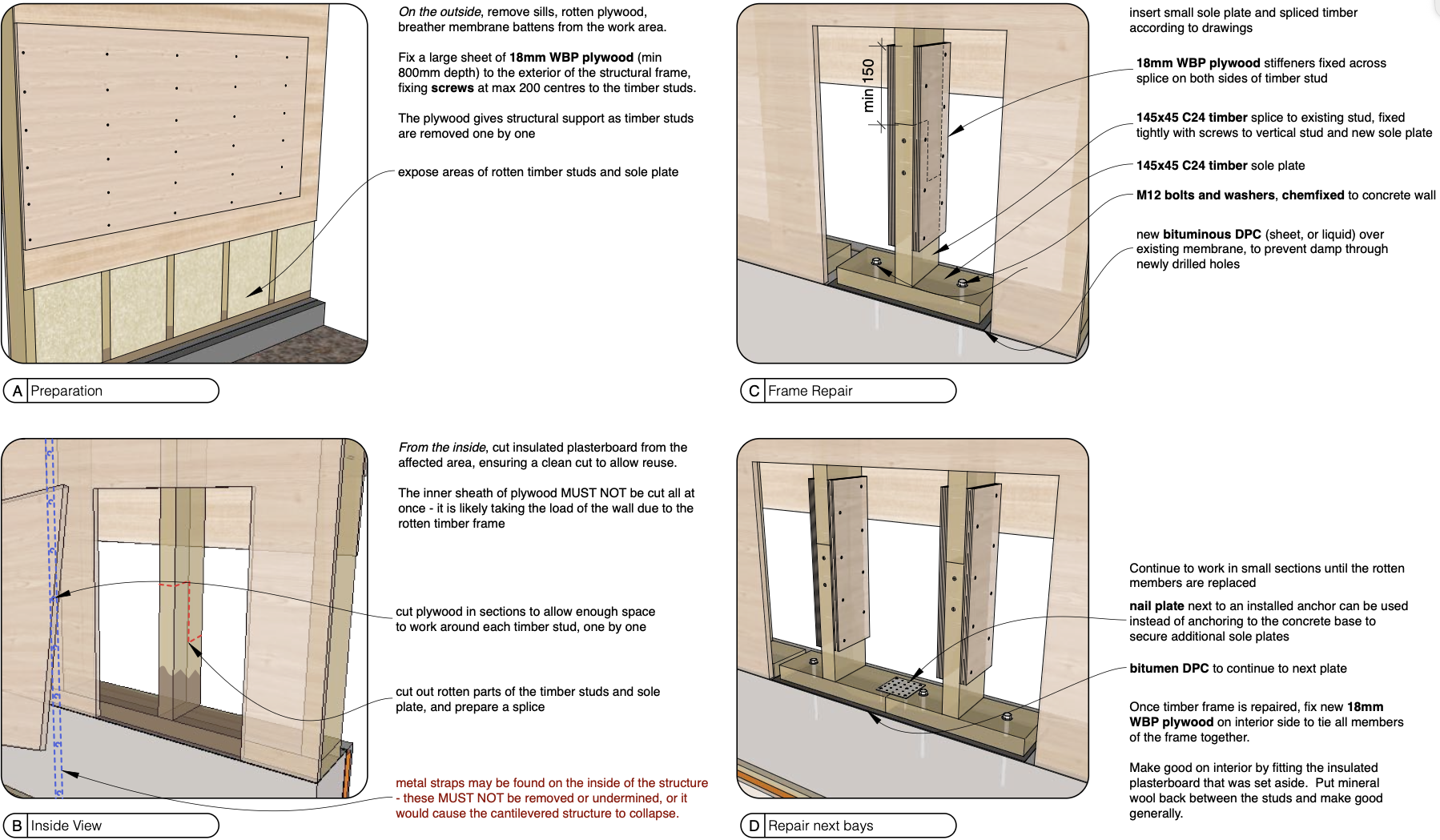
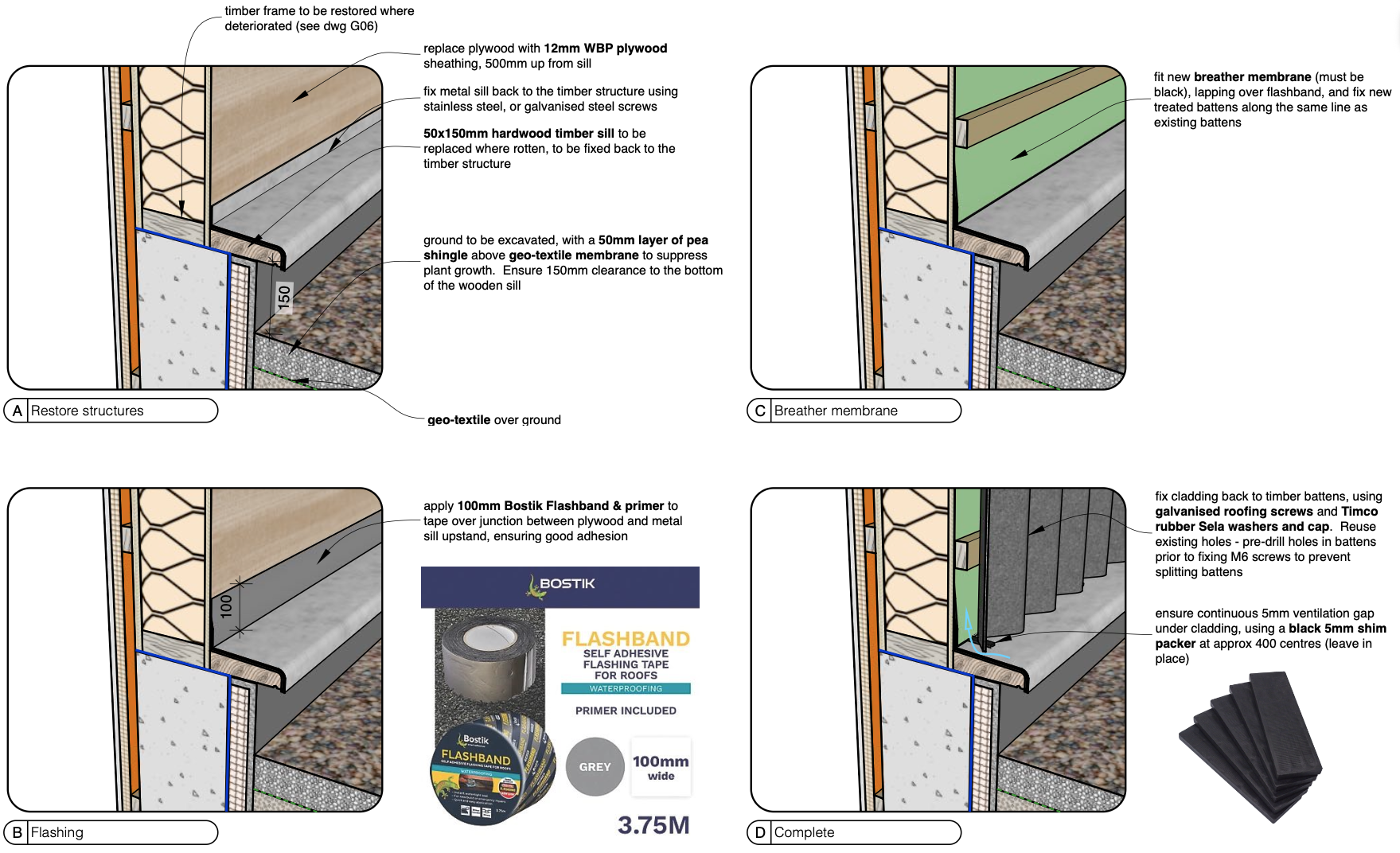
Repair Manual for an Existing Modern Outbuilding

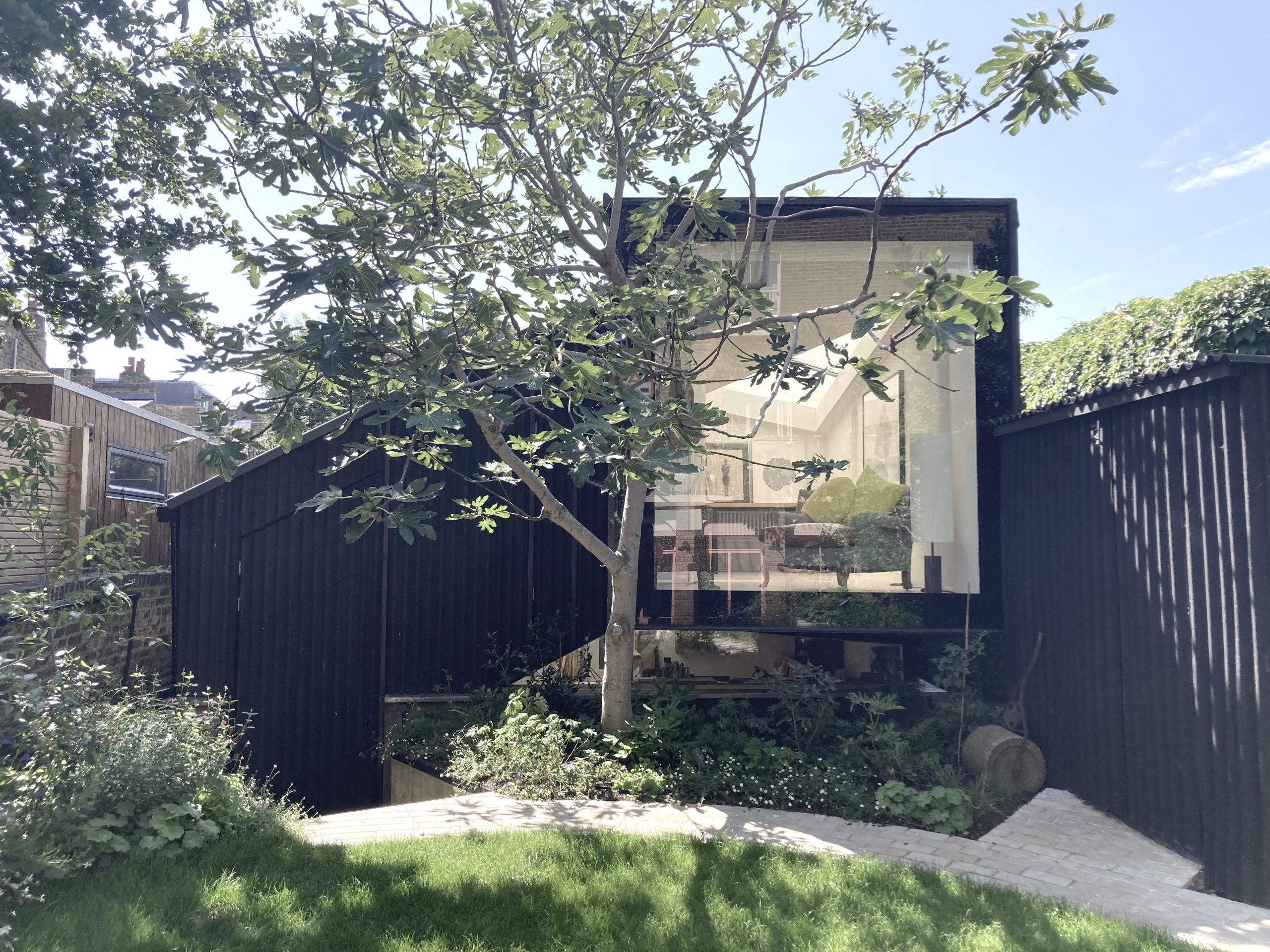
A beautiful building may hide some ugly secrets under the surface. Tom Kaneko was tasked with directing a team to rescue this one-off, uniquely made garden studio building from collapse.

The building was predominantly of timber construction, and beautifully performed as the garden office for the householders. However, the technical detailing was inadequate, causing structural timber to rot over the 10 years since this building was erected.

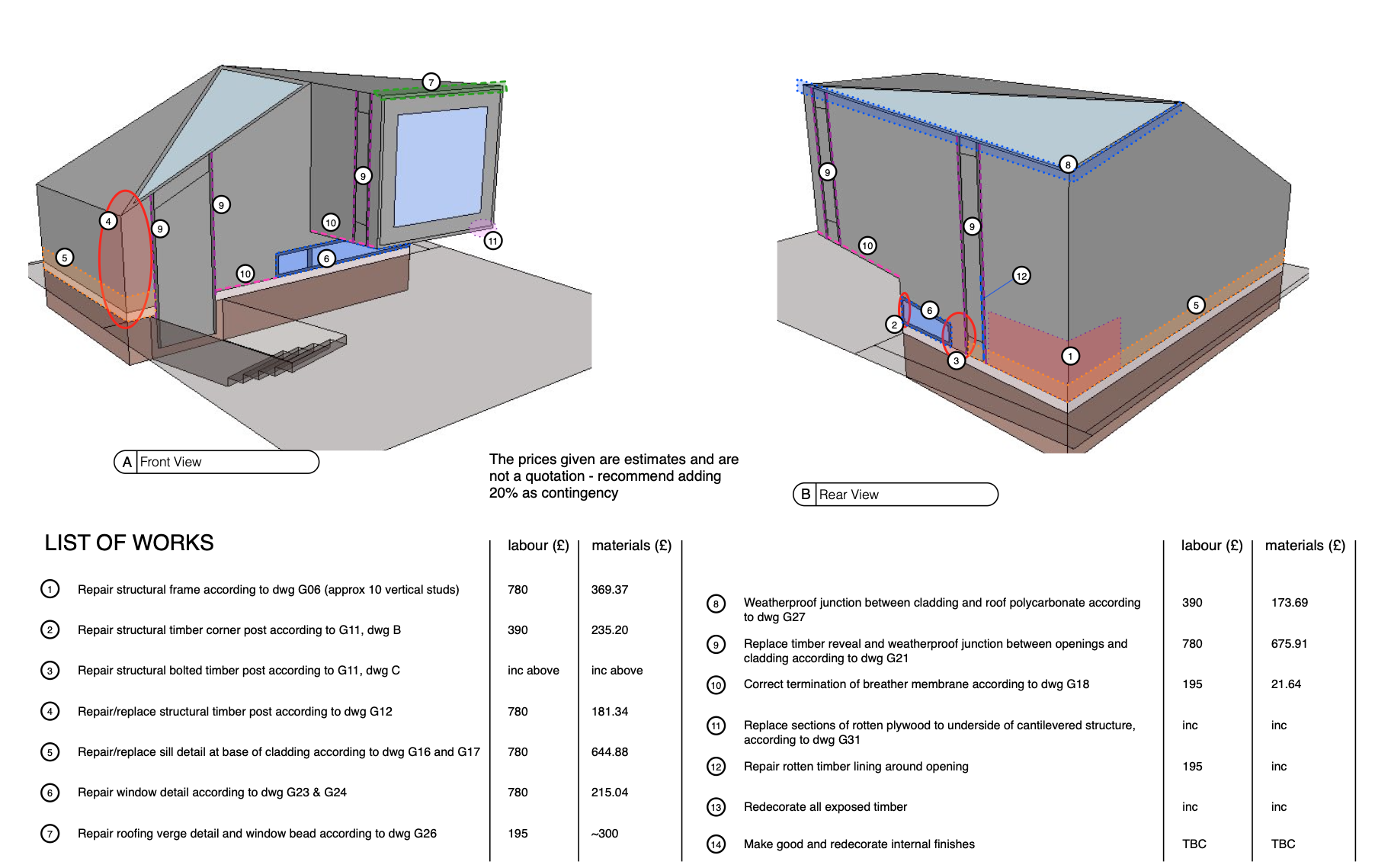
Tom Kaneko diagnosed the design defects, and produced a manual for its repair, though others advocated for its demolition due to the complexity of the task. Using 3D models to communicate the problems and solutions to tradespeople, Tom Kaneko and his team have secured the structural integrity of the building for the next 25 years or more.

Contractor: Rado Bordei

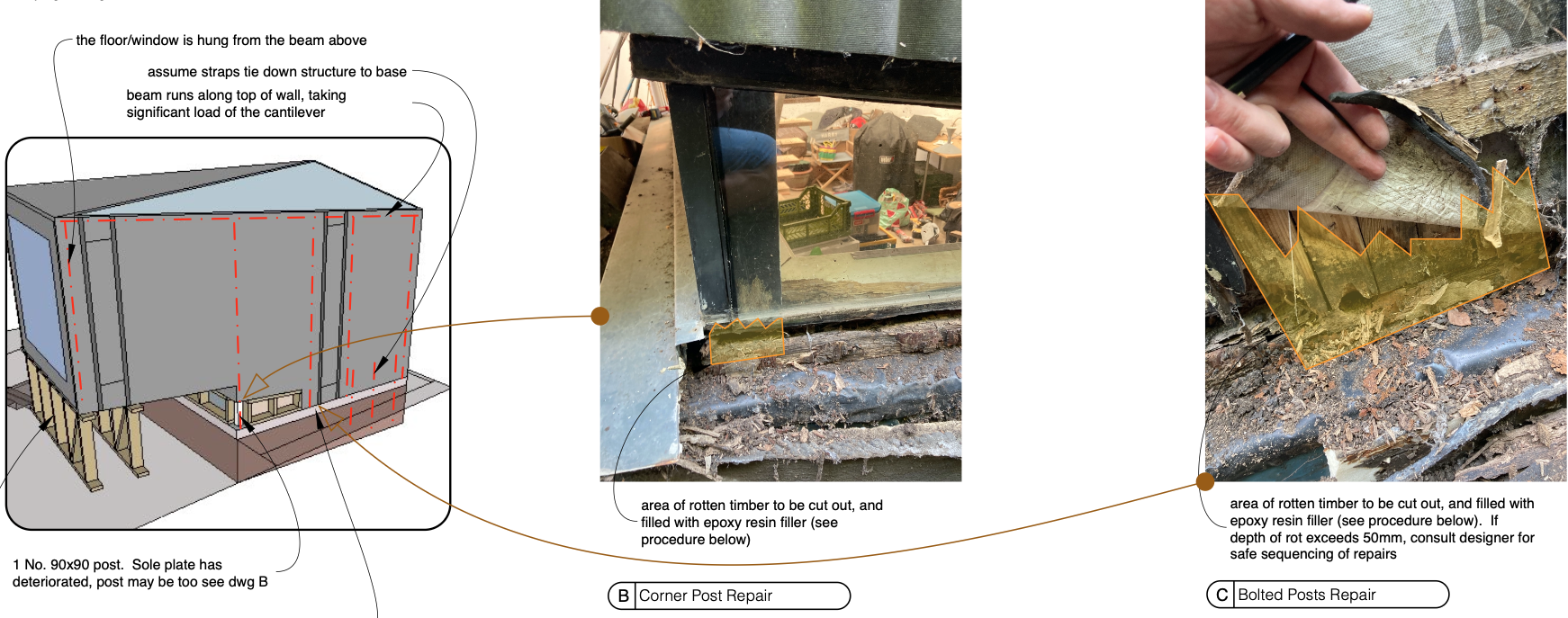
Examples of the extent of damage – and tracing likely structural load paths for this counter-levered section of the building.

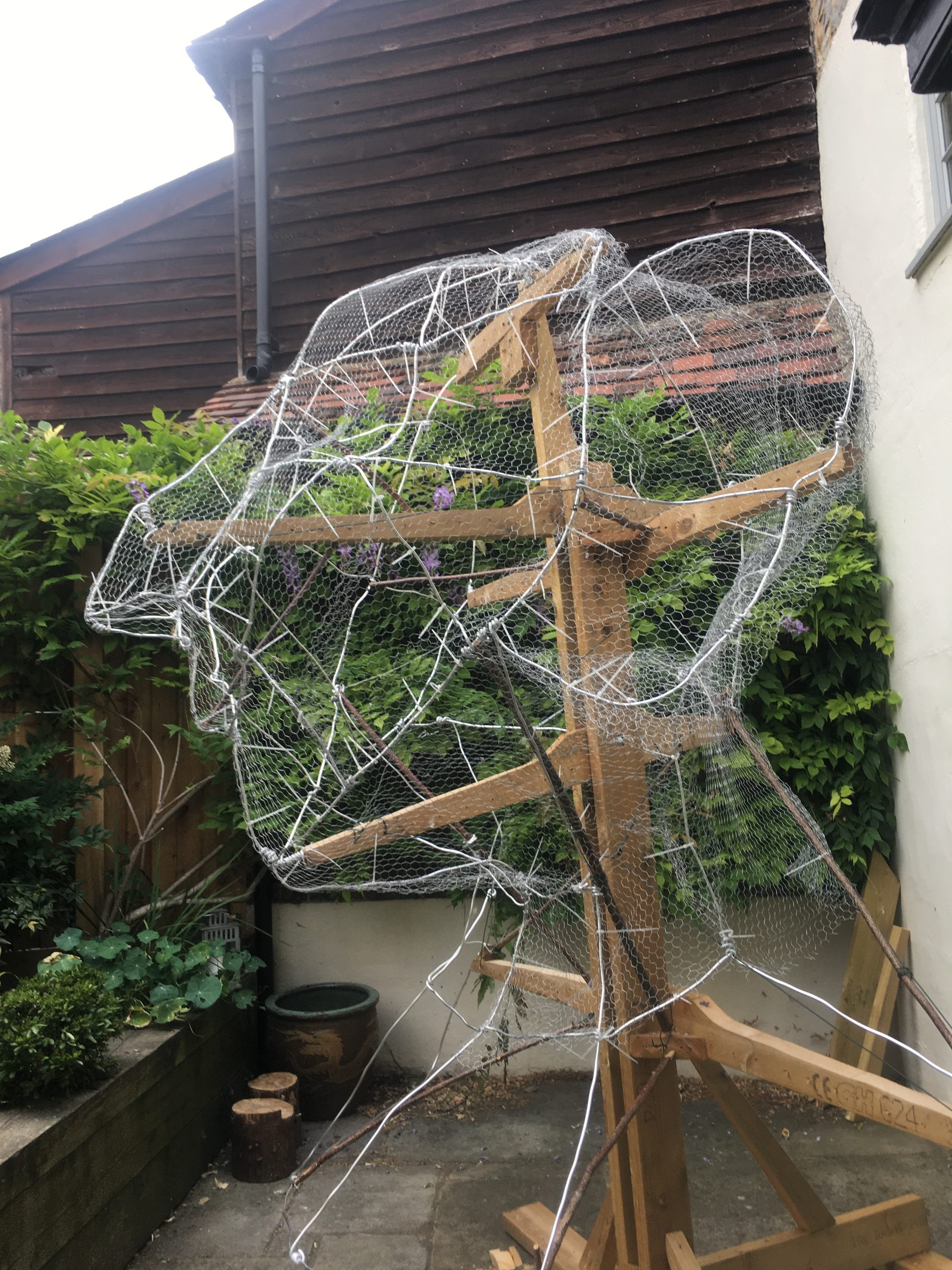
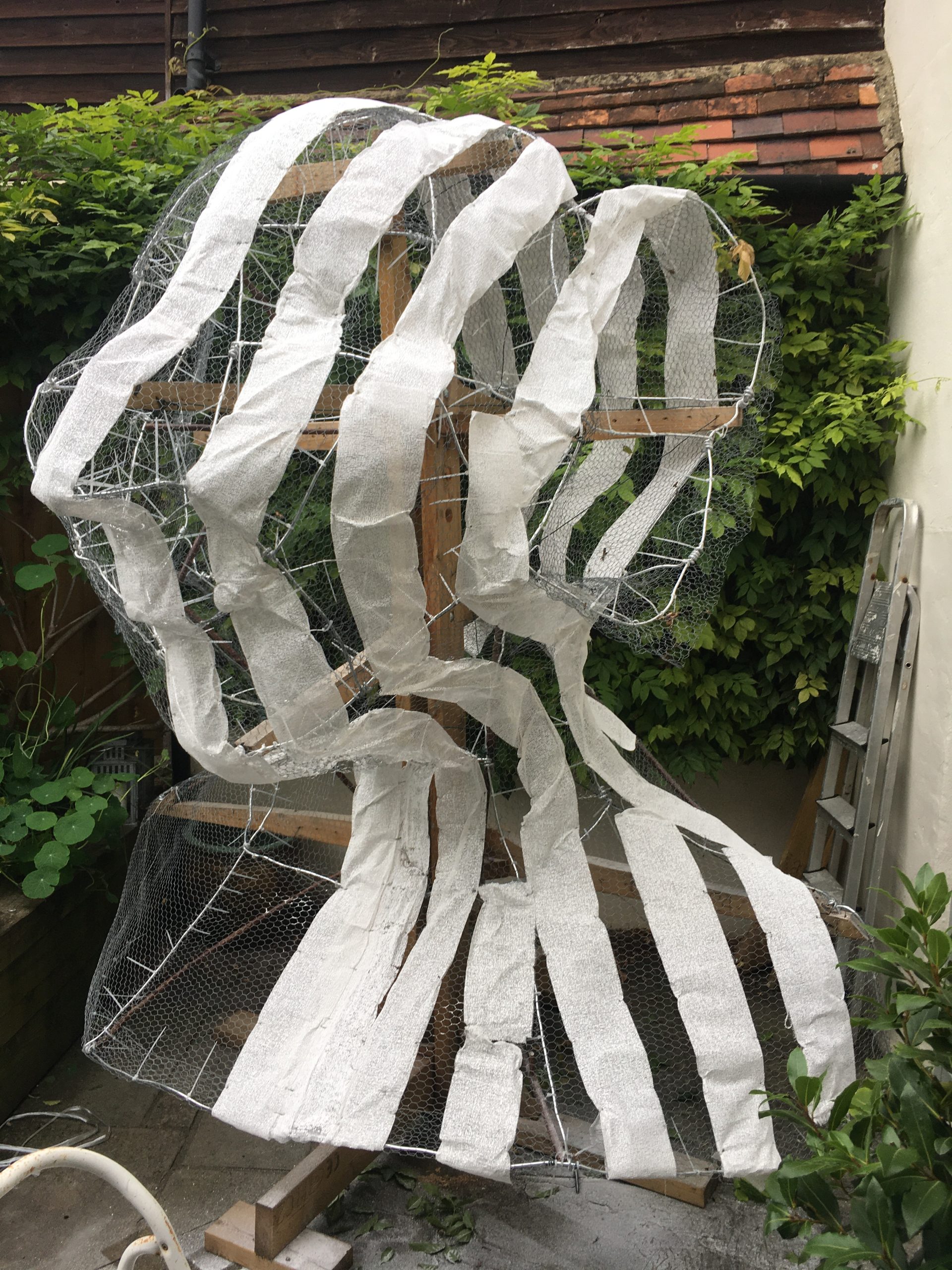
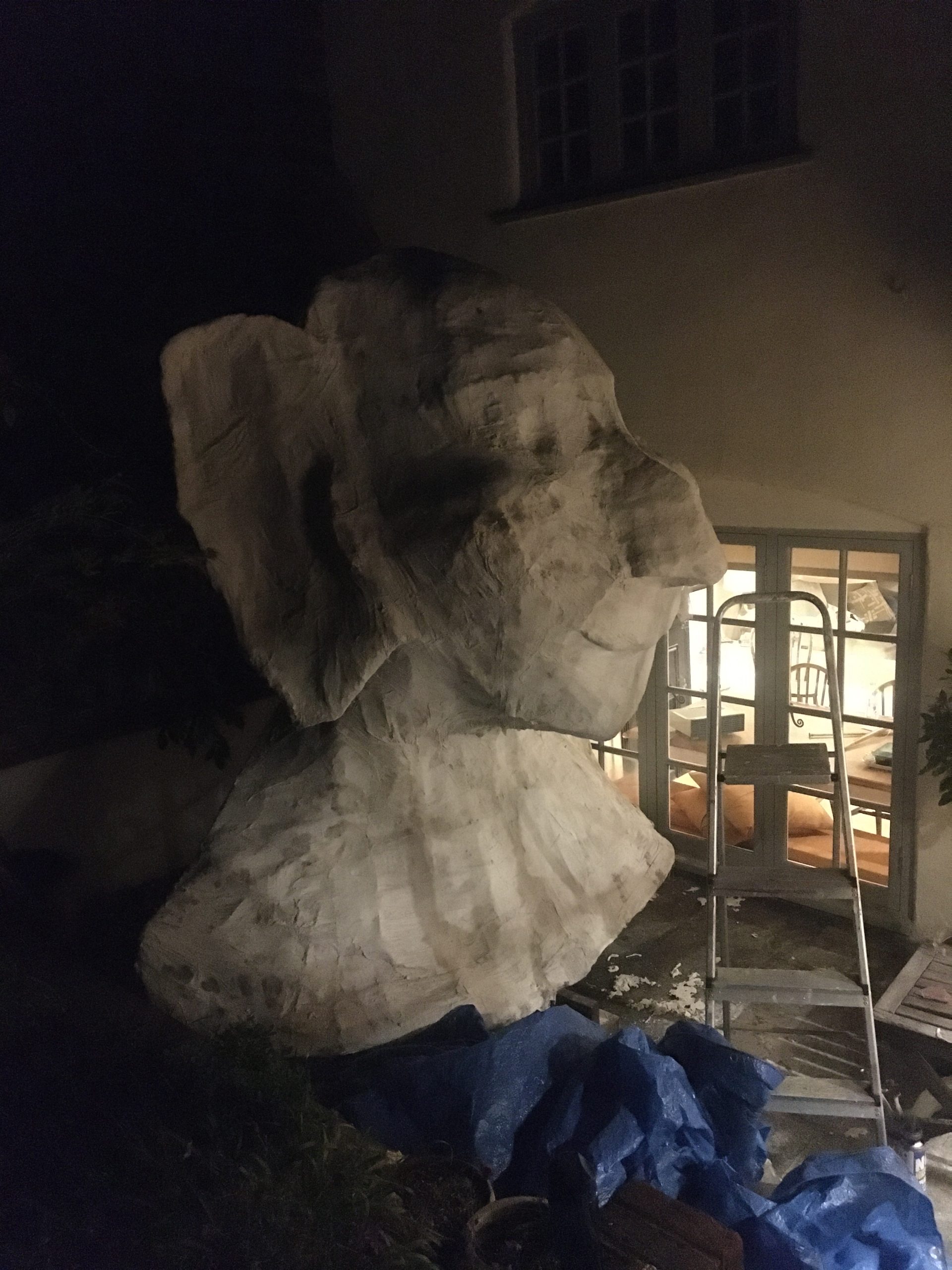
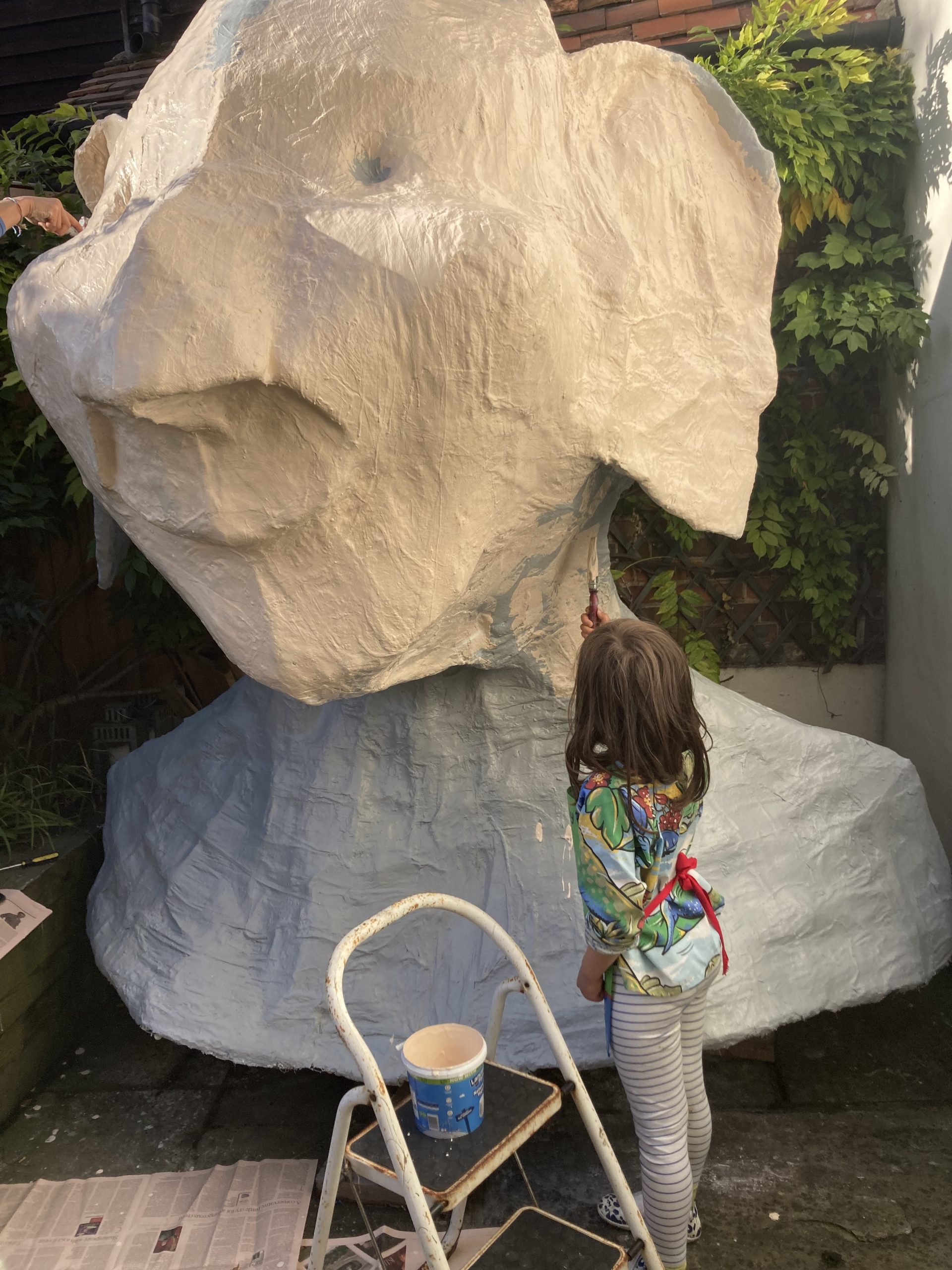
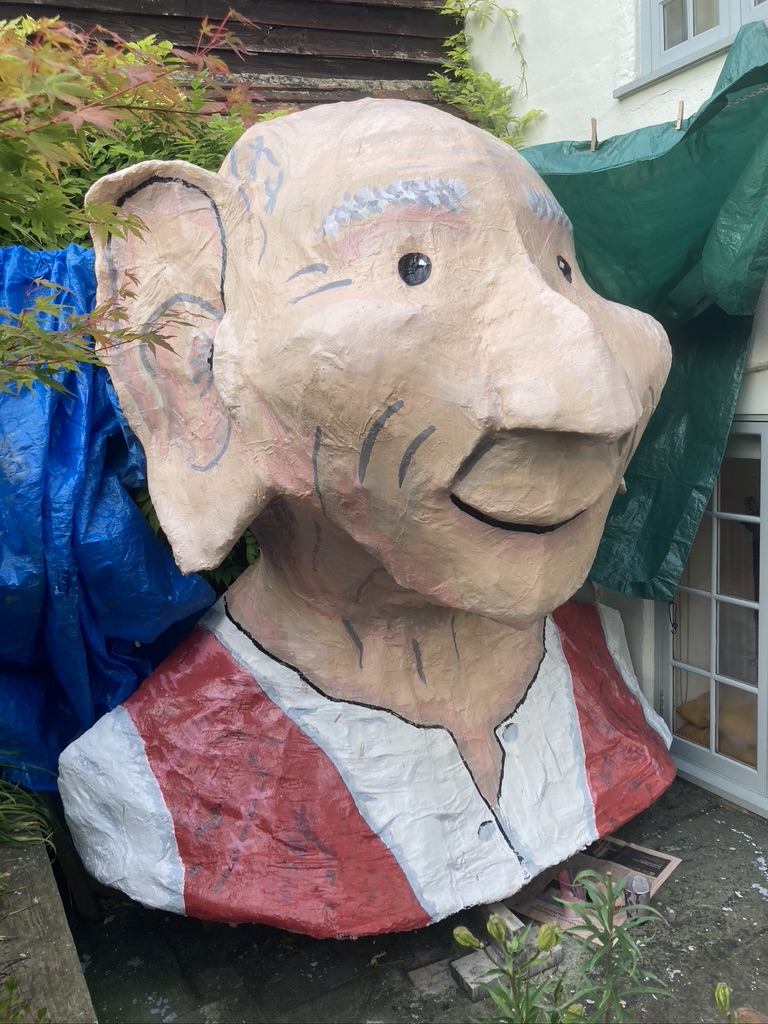
BFG Comes to Great Missenden

2023-Present

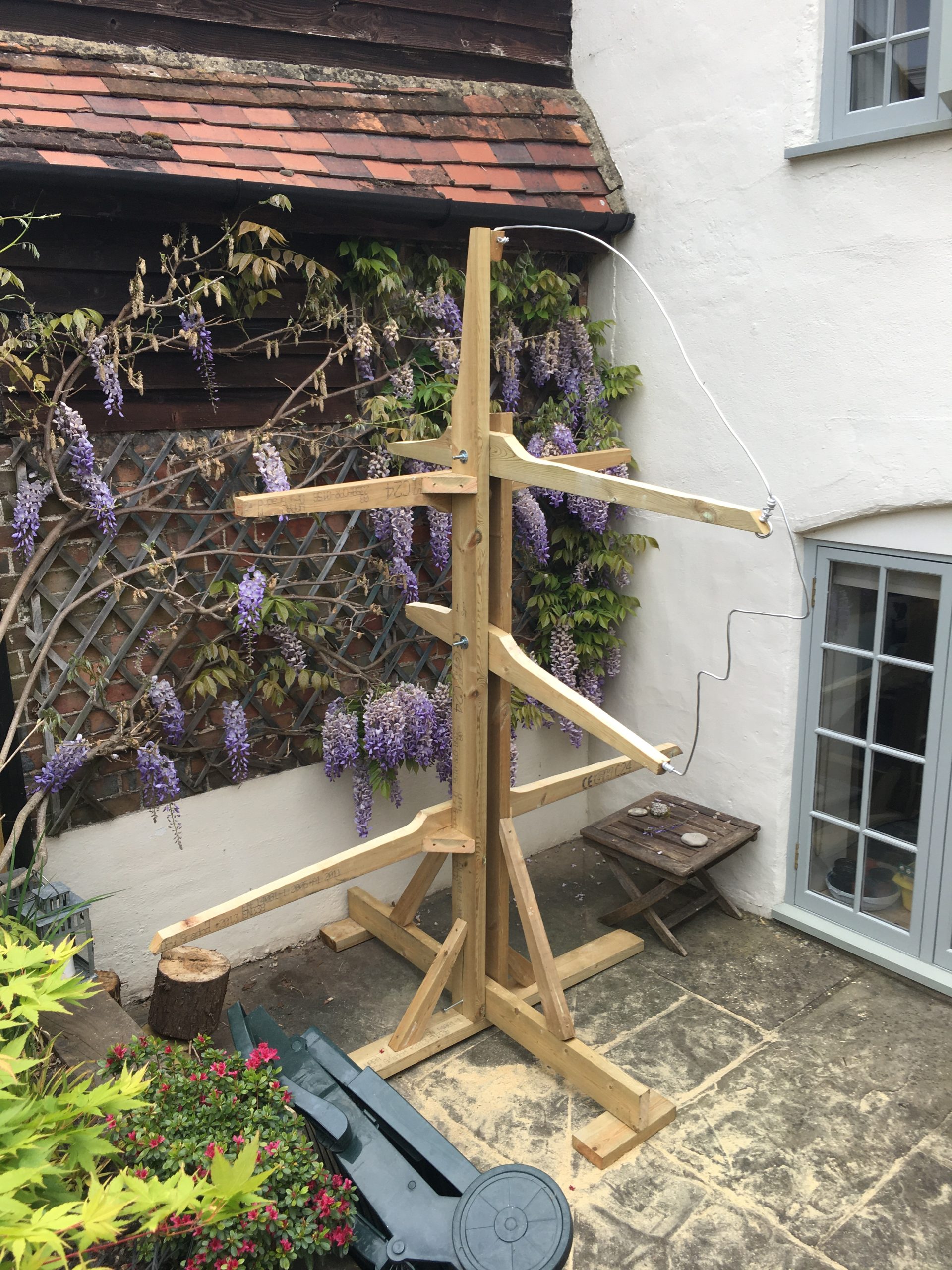
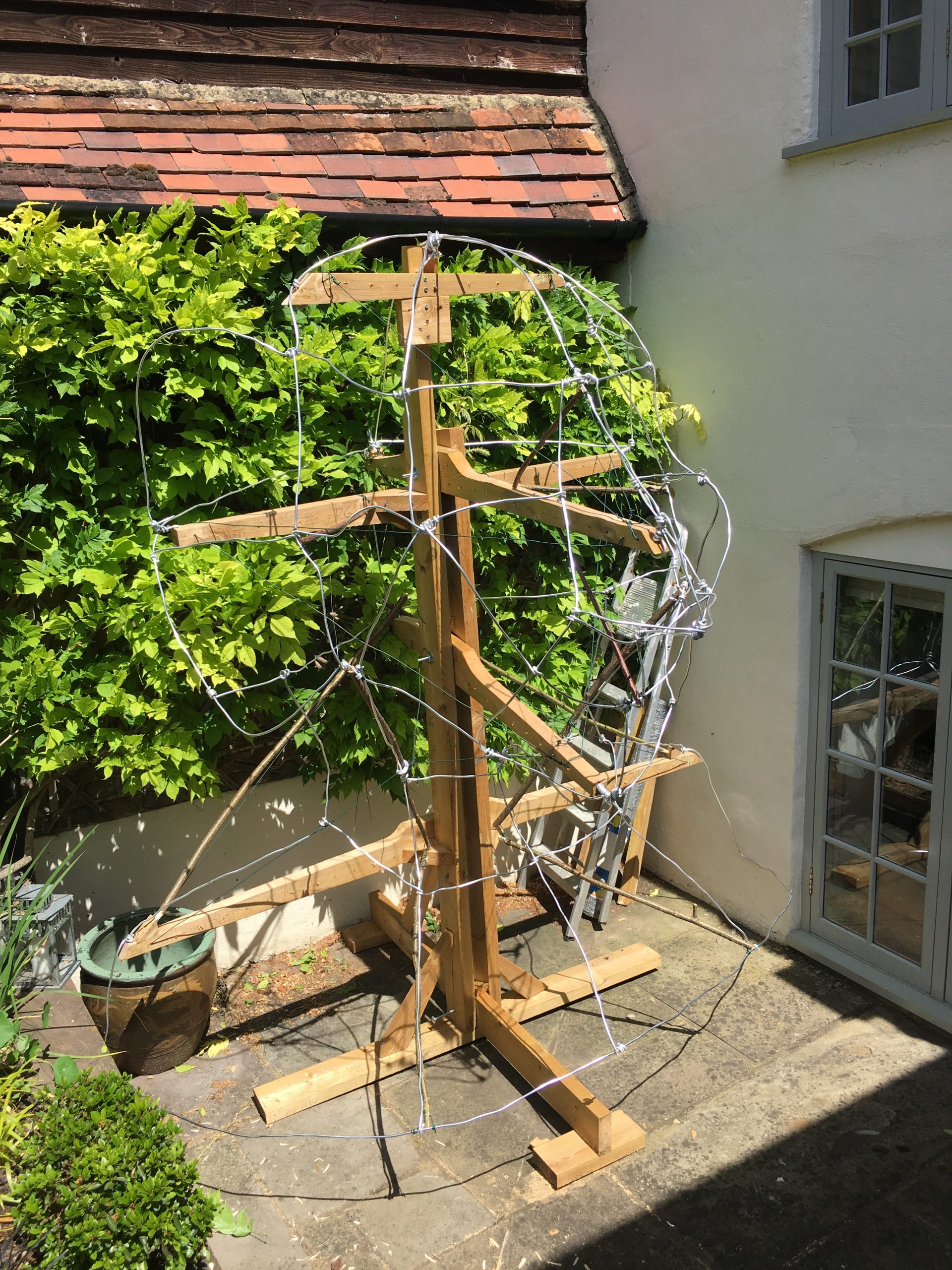
Great Missenden, the former village home of author Roald Dahl, and host to the Roald Dahl Museum. An invitation has been sent to the BFG to come and visit the High Street.

He is a little shy though…

Work in Progress! The BFG will be coming to visit soon!

Suppressing Drone Warfare – SkyMines

Tom Kaneko has become concerned with the growing militarism in the world. Specifically, the emergence of drone warfare, enabled by cheap drone technology, is particularly alarming: it lowers the cost and risk of armed conflict to would-be belligerents. It makes war easier for those who choose it.

In modern war, drones are lethal. They are used to terrorise civilian cities, knock out tanks, act as spotters for artillery, search for targets, and even drop bomblets themselves. Military drones are becoming more autonomous whether we like it or not. Existing counter measures are far too expensive – often being an order of magnitude more expensive than the drones themselves. Radio-jamming measures have limitations, and drone engineers are already finding ways around them.

Seeking Inexpensive Counter-UAV Capabilities

May 2024

Tom Kaneko is seeking to address the drone problem with an engineering solution. He recognises:

  • that all drones makes an identifiable sound during powered flight,
  • that electronic counter-measures will become redundant with time, as drones adapt and become more autonomous,
  • that a counter measure must be at least cheaper than their target, and require minimal oversight,
  • that optical and radar tracking hardware, such as those that guide missiles, is power hungry and expensive.

With these insights and limitations, he has developed a concept for a drone glider, equipped with microphones, that can track, and intercept drones using only their sound. It requires only inexpensive electronic hardware made cheap by the smartphone revolution.

Tom Kaneko has entered two proposals into the Defence and Security Accelerator’s (DASA) OpenCall competitions. One is the airBorne Acoustic Tracking (BAT) prototype proposal, and the next iteration: the SkyMines/DroneMines concept.

airBorne Acoustic Tracker (BAT)

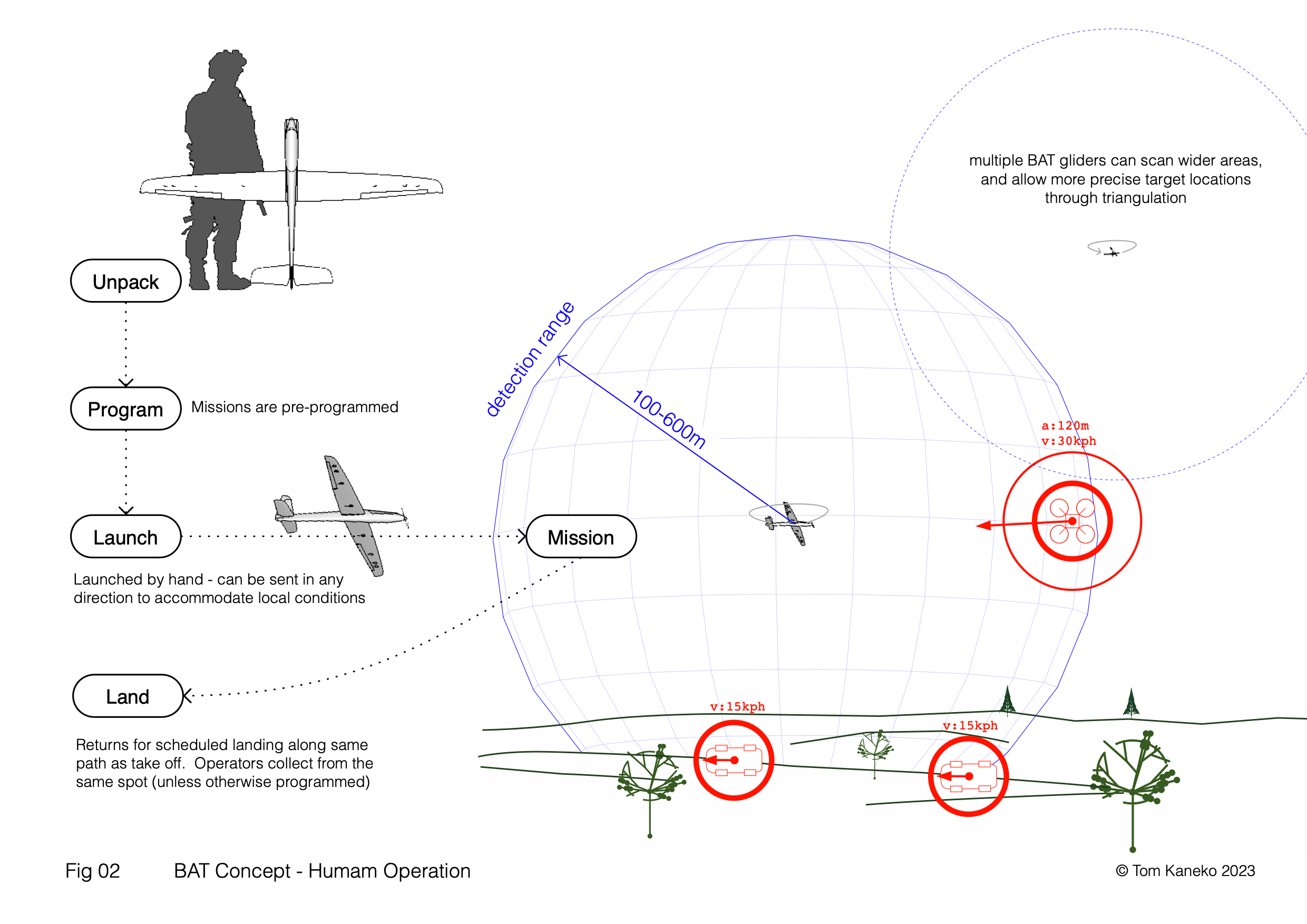
airBorne Acoustic Tracker (BAT) Concept - Overview

The BAT glider would autonomously patrol a given area of sky, to detect and locate acoustic objects, including UAVs. This information is transmitted to a ground station.

SkyMines

The SkyMines/DroneMines concept is the next iteration of the BAT glider, where the glider becomes a self-homing acoustic mine against UAV threats. Given they are inexpensive, about £500 or less, these gliders are considered to be expendable, and interception means crashing, and tangling with a target. It can be carried out without need of explosives.

Seeking Funding for Development

With his experience in computer programming, sound engineering, and making things, Tom Kaneko seeks to develop these concepts into real capabilities. DASA have approved the research and development proposal as fundable, and there is an active effort to find the funds to push it forward. Tom Kaneko expects the demand for this counter-drone capability to only grow in the near future.

Saudi Arabia can produce green aviation fuel for the world by taking CO2 from the air

Saudi Arabia has huge reserves of oil under the ground, but it also has a huge resource of solar energy and huge areas of desert above it.  My calculations show that 320 square kilometers of Photovoltaic cells in this nation can produce the energy required to meet the demand for all of the world’s aviation fuel.  320 square kilometers amounts to 0.017% of the land area of Saudi Arabia.

The technologies required involve the production of methane (CH4) from CO2 and water (the Sebatier process), and the process of converting methane into liquid fuels, with further CO2 capture, according to the processes researched by the Carbon Engineering Group.

Given the abundance of solar energy in Saudi Arabia and the vast areas of desert, this nation is a wonderful candidate for leveraging this technology for a greener future.  Unbeknownst to many, Saudi Arabia has the cheapest per unit cost of solar energy production in the world.

The prospect of huge solar farms in the desert also have the added benefit of cooling the local climate around these solar farms, by converting a portion of the sun’s energy into electricity and then liquid fuel for export.

Why aviation fuel anyway?

I’ve chosen to focus on aviation fuel as air travel is proving to be the most difficult case of oil consumption to replace with clean energy.  Just looking at the physics of air travel can show that this is the case.  Then consider that mass transport aeroplane design and engineering haven’t fundamentally changed since the 1970s (Boeing 747’s first flight was in 1970), it is hard to see how science and engineering of the aeroplane itself can give us breakthroughs any time soon.

The obvious answer is in making the fuel itself carbon neutral, by storing the sun’s energy of today in the chemical bonds of hydrocarbon fuel.  Once fuel is produced with the process explained below, the infrastructure of the aviation industry need not change.


Why Saudi Arabia?  They make money from oil….

You’d think that the Saudi’s would have nothing to do with clean energy.  However, there are major solar energy projects already underway for electricity generation in Saudi Arabia.  As prices for oil goes up, this form of energy is looking to be a cheaper alternative to burning oil for power generation.  The pure economic case for solar energy is slowly building.

There is also the major advantage for a nation that is part of OPEC, which effectively sets the world’s oil price, to have a stake in carbon neutral oil.  Give the task to a nation outside of OPEC, and they can effectively kill off such an emerging industry by forcing dirty oil prices down.

If they are also producing carbon-neutral oil, however, they suddenly have a reason not to push down dirty oil prices: to support an industry that they can call their own.

Then there is the other point that if you want to start taking CO2 out of the air and back underground, then their oil wells look like a pretty damn good place to put it!

Here are my workings:

To Make the Liquid Fuel from CO2, Gas and Electricity

From: https://www.cell.com/action/showPdf?pii=S2542-4351%2818%2930225-3

To capture 1 tonne of CO2 and turn it into liquid fuel, 5.25GJ of methane is required, and 366kWh of electricity.

Assuming 90% energy efficiency, this results in [5.25+(366*0.0036)] * 0.90 = 5.91GJ of oil

5.91GJ of oil produced

…from 5.25GJ of methane

…and 366kWh of electricity


To Make Gas from CO2, Water and Electricity

To make 5.25GJ of methane, using the Sebatier process, with 95% efficiency, 5.25*278/0.95 = 1536kWh of electricity is required.

Given that CO2 + 2H2O => CH4 + 2O2

… which means 2.75 tonnes of CO2 is required for every tonne of CH4 produced

… and 1 tonne of methane is equivalent to 41.9GJ of gas

…the process removes 2.75/41.9=0.0656 tonnes of CO2 for every GJ of methane produced.

To make 5.25 GJ of methane,

… 0.0656*5.25=0.34 tonnes of CO2 is removed from the atmosphere,

… requiring 1536kWh of electricity


To Meet Electricity Demands for the Above

Therefore, 1536+366=1902kWh of electricity is required to remove 1+0.34=1.34 tonnes of CO2 from the atmosphere.  5.91GJ of liquid oil is produced in this process.

1902kWh of electricity input

… resulting 1.34 tonnes of CO2 removed

… producing 5.91GJ of liquid oil


The Demand for Airline Fuel

https://www.statista.com/statistics/655057/fuel-consumption-of-airlines-worldwide/

Global aviation fuel consumption annually in 2019 was 97 billion gallons

97 x 10^9 gallons = 12.7 x 10^9 GJ of oil required to meet world demand for aviation fuel

Solar Power Required in Saudi Arabia

https://www.stats.gov.sa/sites/default/files/indicators_of_renewable_energy_in_saudi_arabia_2017_en_2.pdf

To power the process using solar power in Saudi Arabia, note:

  • solar irradiation averages 6.0kWh/m2 per day
  • efficiency of PV cells at converting sun’s energy into electricity is about 20%

For each 1GJ of liquid oil production from air, 321.8 kWh of electricity is required

To produce 12.7 x 10^9 GJ of oil, 4,087 x 10^9 kWh of electricity is required.

Per day: 0.0348 x 10^9 GJ of oil, 11.2 x 10^9 kWh of electricity

To meet demand, (11.2×10^9 / (6.0*0.2)) = 0.37 x10^9 m2 of PV cells are required.

… or 370km2 of PV cells produces 12.7 billion GJ of oil

Total area of Saudi Arabia is 2,149,690 km2

Therefore, covering 0.017% of the ground in Saudi Arabia will produce enough energy to provide fuel for the entire aviation sector of the world.


The cost of energy required

But if this solar energy is too expensive, compared with oil, then we have a problem.  Let’s do the sums:

The cost of solar power in Saudi Arabia is looking to be around 2 cents per kWh :  https://www.thenational.ae/business/energy/world-s-cheapest-prices-submitted-for-saudi-arabia-s-first-solar-project-1.663842

We said earlier that 1902kWh of electricity would be required to produce 5.91GJ of liquid oil.  Or 1902/5.91 = 321kWh per GJ

321kWh @ 2 cents per kWh  would cost $6.42.  Therefore the cost of electricity of creating liquid oil from air would be $6.42 per GJ

Average jet fuel price in 2019 was $79.7 per barrel, or $79.7 per 5.86GJ.  In other words 79.7/5.86 =   $13.6 per GJ.  The cost of Jet fuel today is $13.6 per GJ

Note that only the electricity costs have been factored in – other capital costs for the air to fuel plants have not been factored in.  But given that the buying price of jet fuel is more than twice the cost of the solar power required (which I believe is the major cost), there is room for this.  The Carbon Engineering Group have published a paper that goes into the costs of the air-to-oil plant, but I do not understand them enough to plug into these calculations.  See https://www.cell.com/action/showPdf?pii=S2542-4351%2818%2930225-3

Imran and Alison’s House, Holloway

Mercers Road - Kitchen Interior

Imran and Alison sought to achieve a more sociable layout by creating a kitchen that was connected to the rest of their dining and living areas.

Tom Kaneko was commissioned to convert an existing pitched roof garage into a kitchen which would be newly connected to the dining room. As well as a kitchen, a utility entrance with bike storage and a reading platform is packed into the extension.

Contractor: Giedrius Gudynas

Steve & Alex’s House

Interior view of Dangan Road

Steve and Alex wished for a better relationship with their garden and the natural light, at their Victorian Terraced house, which was in need of upgrading.

Tom Kaneko was commissioned to extend the ground floor, renovate the interiors and extend and alter the existing loft extension.

Interior Design by Pippa Murray
Photography by Bruce Hemming

Featured on Houzz

Interior view of Dangan Road
Exterior view of Dangan Road
Shelves in Dangan Road
Interior of Dangan Road
Kitchen units from Dangan Road
Interior Shelf view of Dangan Road
Furniture and Shelf detail from Dangan Road
Elm bespoke furniture with shelves
Joinery unit from Dangan Road
Dining Area in Dangan Road
Dining Room with shelving
Bathroom in Dangan Road
Traditional panelled Bathroom
Shower Room in Dangan Road

Tom & Vic’s House, Wanstead

Kitchen Dining Room
Kitchen Dining Room

Tom & Vic desired more roomy ground floor rooms with a better relationship to the garden.

Tom Kaneko was commissioned to extend the ground floor and renovate the interiors. The result is a bright, playful space that works for the couple and a young daughter.

Contractor: John McGivney
Photography by Bruce Hemming

Essaouira Hotel

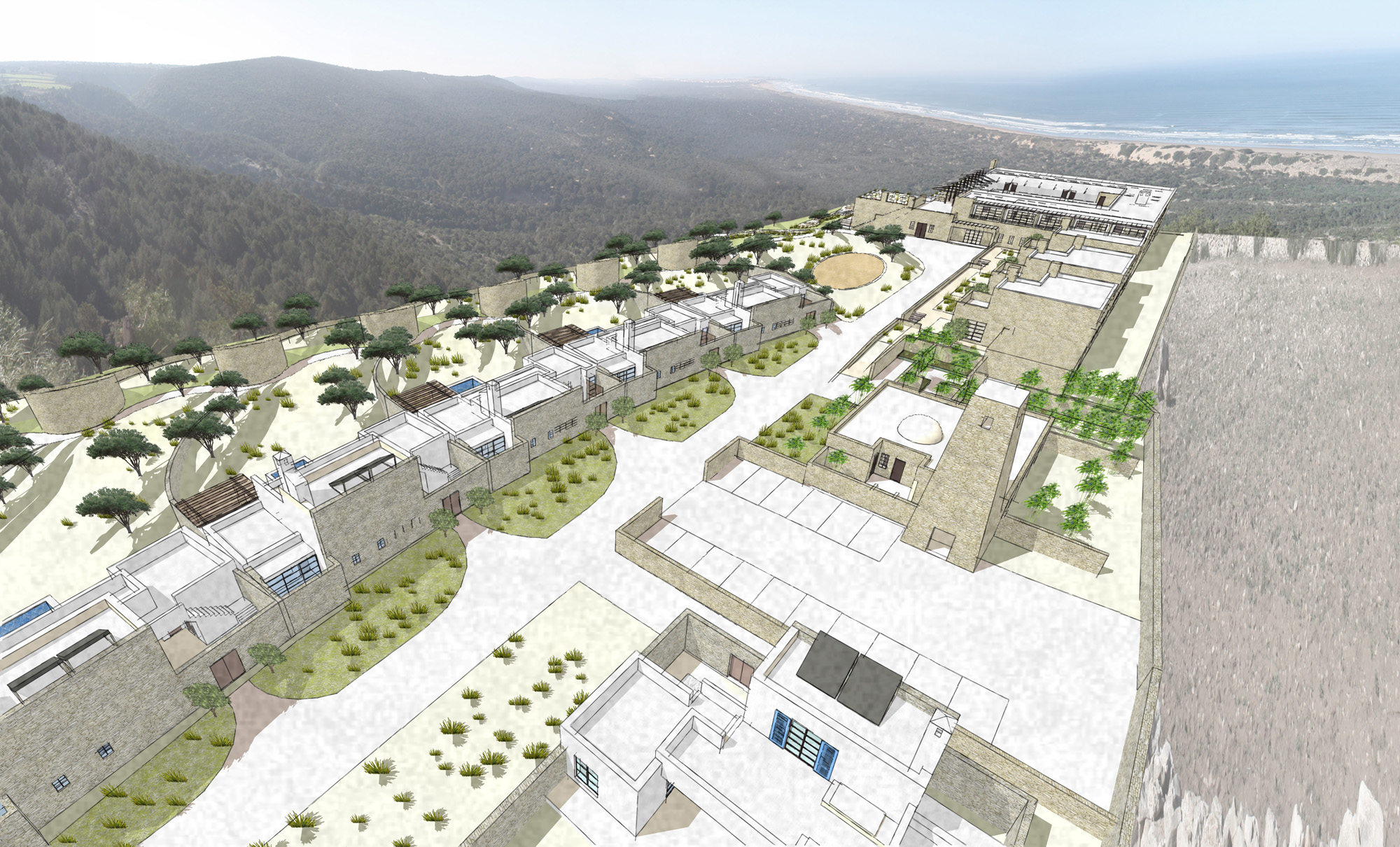
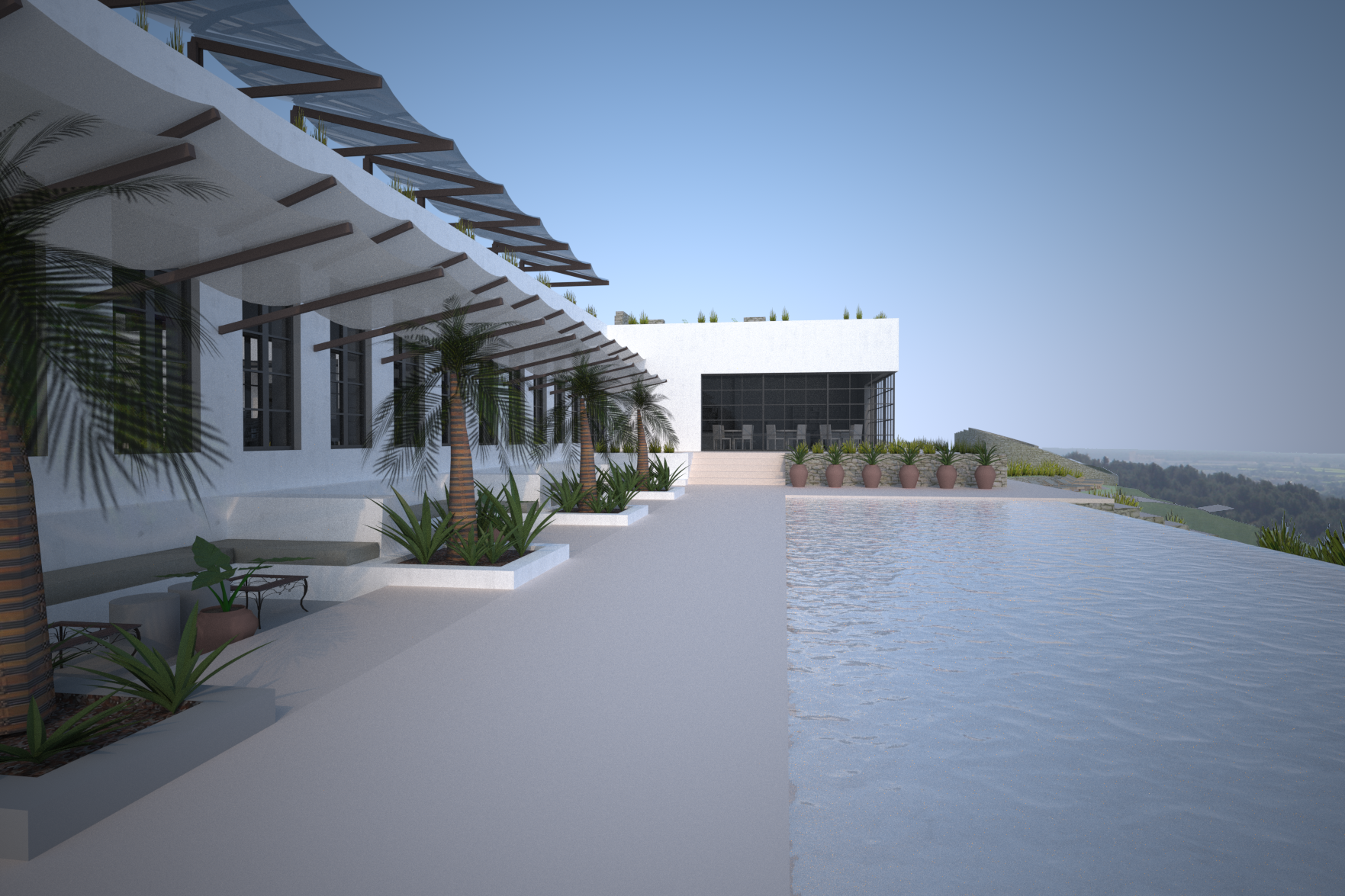
Tom Kaneko has set out on a private venture with GIMG Project Management and Chassay Studio for a hotel development on a spectacular site near the coast of Morocco.

The site is atop a ridge overlooking the sea, with stunning views along the coast and public forest. The current design takes full advantage of the views, with buildings nested naturally into the sloping, partially wooded landscape.

The fully managed resort will comprise of hotel, six villas and six self contained suites, along with restaurant and pool area, spa and Hamam as well as reception and staff quarters.

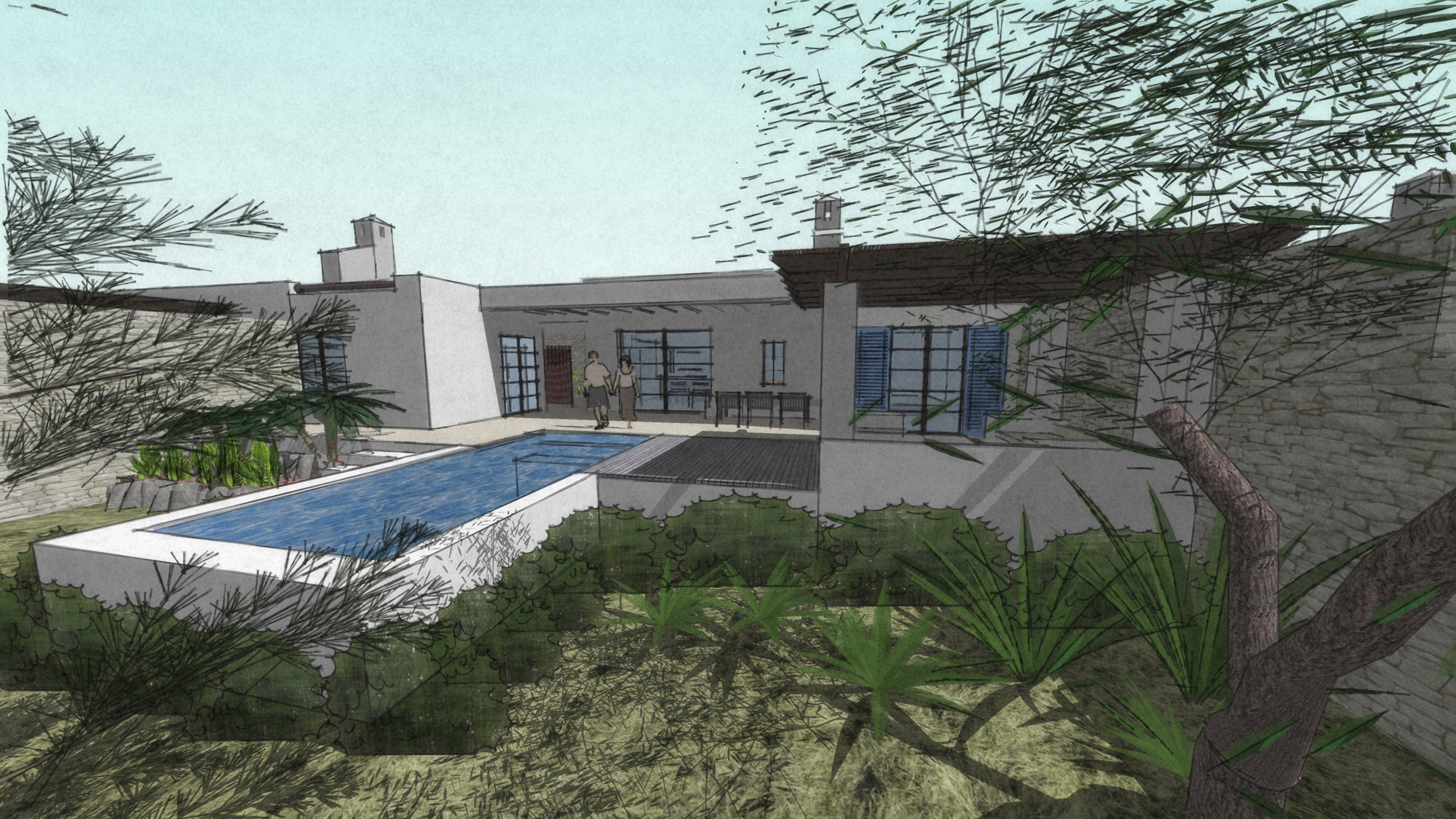
The villas will be a mixture of two and three bedrooms with its own private terrace, kitchen, living areas, roof terraces and small swimming pools. All afford magnificent views of the coast.

Jemima’s House

This project proves how a modest budget needn’t mean small ambitions when it comes to domestic architecture. With just £70,000, Tom Kaneko introduced natural light and air to a typical terraced house.

The brief was to extend the living space on the ground floor, and create a light and open space to enjoy cooking, dining and living. Jemima wanted a place to entertain her friends in any season.

Jemima’s House was part of Open House London in September 2014.

View a Photographic Tour of Jemima’s House
Open House Listing
Video Tour of Jemima’s House

Engineer: Jon Douglas
Contractor: John Christopher Construction
Photography by Isabel Sierra y Gomez de Leon

The old house was a beautiful place in winter, when one is more concerned with looking inward, but when the days become longer, the thick walls kept the light and life of summer out, and the garden was a separate entity to the rhythm of life within the house.

The interior walls are panelled with horizontal timber boards, which, like the exposed rafters, are lightly white-washed, creating a calmer appearance. The wood is Norwegian Spruce – the cheapest and most readily available timber found in any builder’s merchant.

Within the generous openness of the extension, hide some intimate spaces that balance form and function. To bring light into the heart of the house, a light well is positioned between the old and new wings. Currently functioning as an office, it could one day be a winter garden, or a library. It sits beside a utility area with a tiny downstairs loo, and a place to hang your coat.

Finally, a small sitting space is tucked into a sheltered corner, with a private view of the garden. It is a human-sized hole for one person to read in, or two to be snug, on soft cushions cocooned in white-washed timber panels.

The success of the project is in creating illusion: of space and air within the width of a narrow terrace; the strong sense of nature in a densely built street and city; the lightness of wood behind a heavy brick facade.